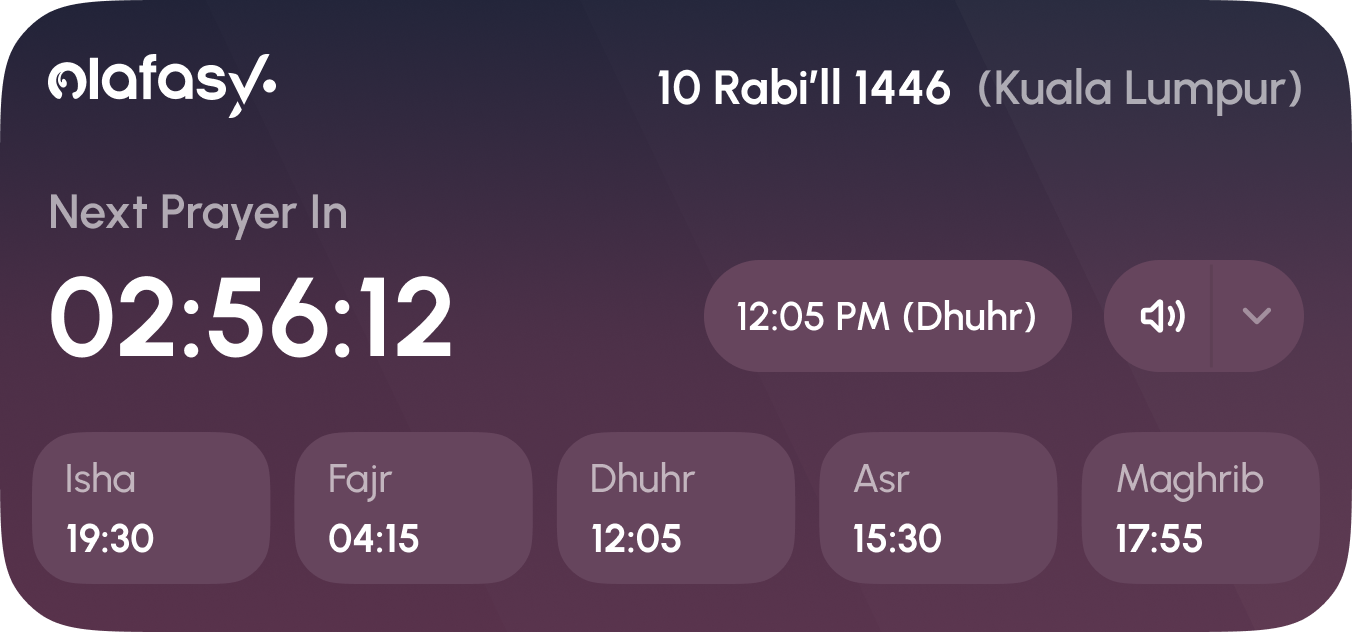
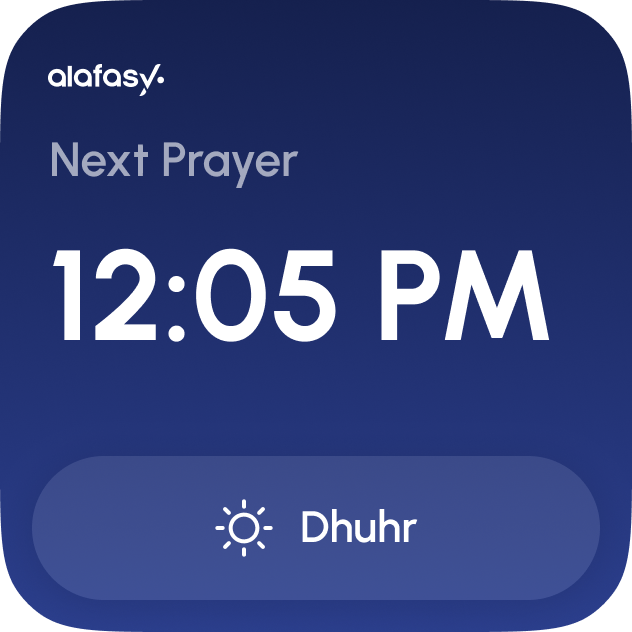
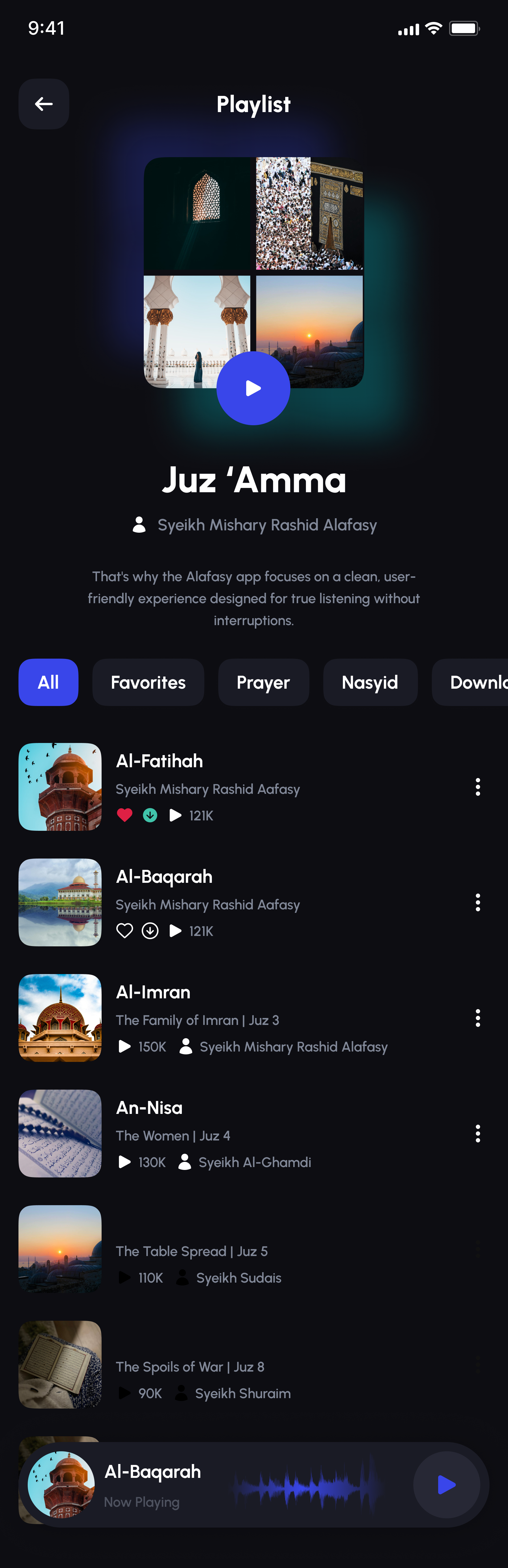
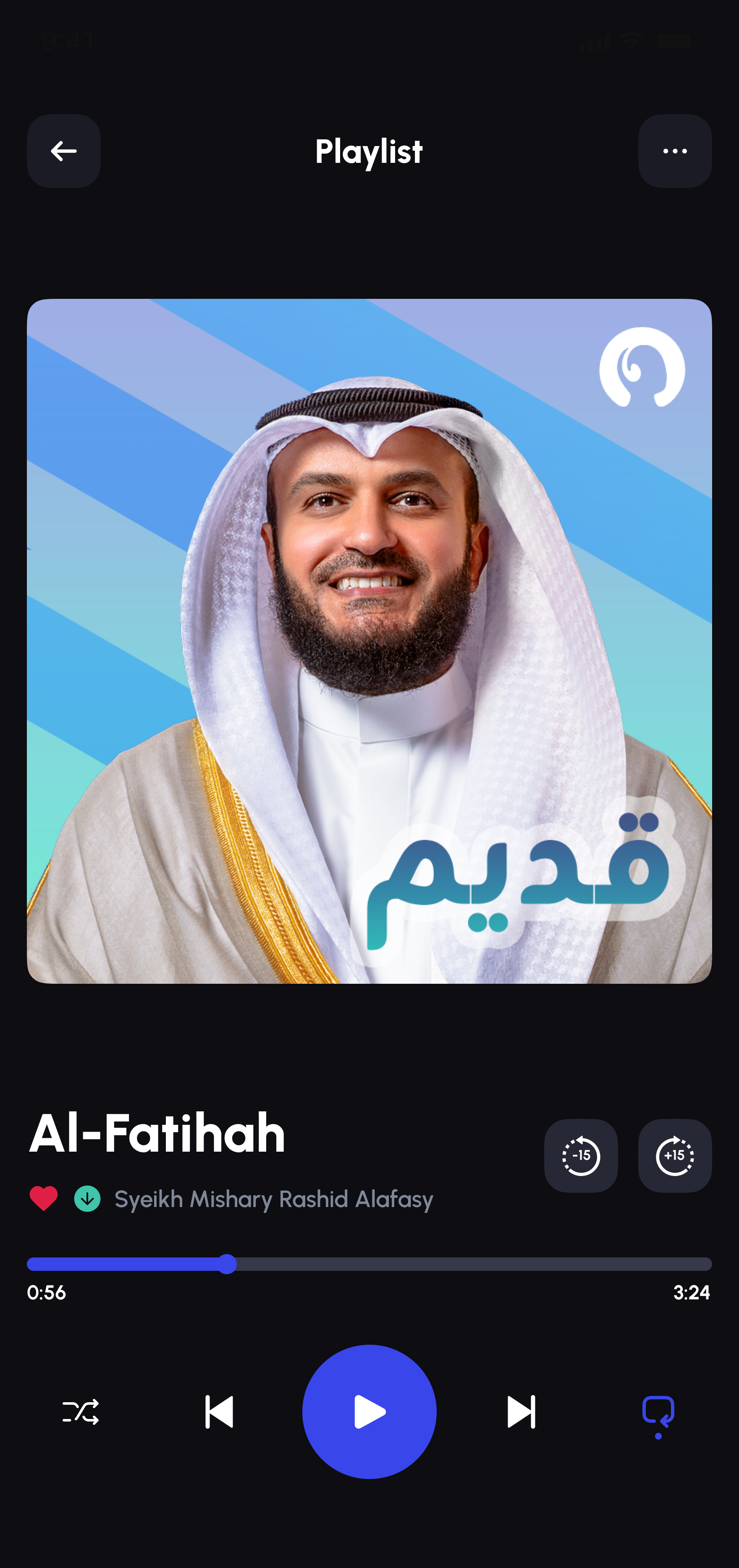
Prayer times and tracking, Qiblah direction, Qur'an reading, dzikir, nasheeds, and hadith reflection, named after Sheikh Mishary Rashid Alafasy and built to support daily spiritual practice anytime, anywhere. Live on the App Store, Play Store, and AppGallery today.
Prayer-time apps are a crowded category, most look interchangeable: a countdown, a list of five times, a green mosque icon. Alafasy needed to feel calmer and more considered than that, something closer to a daily companion than a utility, built around Sheikh Mishary Rashid Alafasy's recitations and a visual language that actually responds to the sky outside.
Alafasy shipped with far more surface area than any one case study can walk through screen by screen. These are six areas that show the range, from account basics to an AI-assisted recitation checker to a small charity marketplace tucked inside a prayer app.
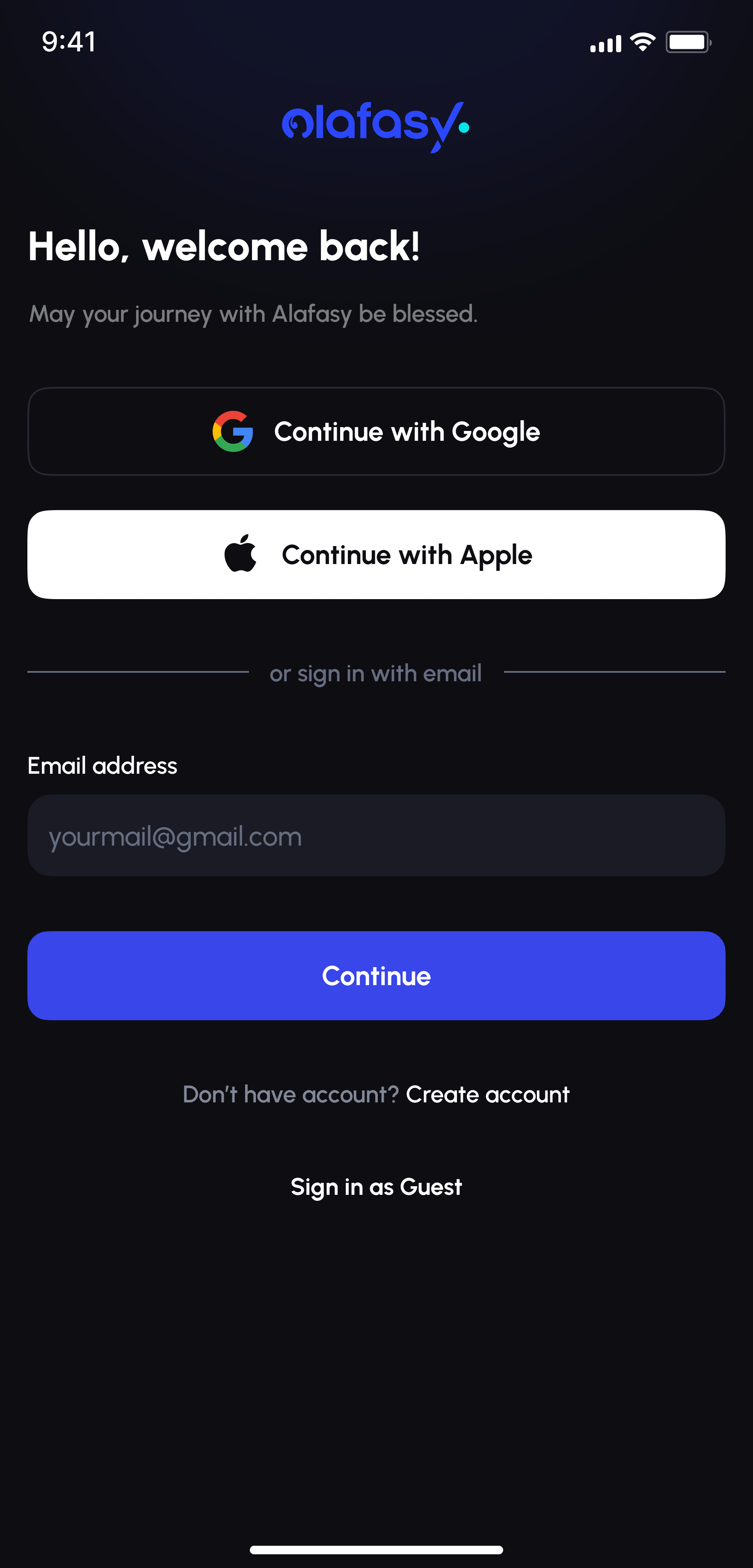
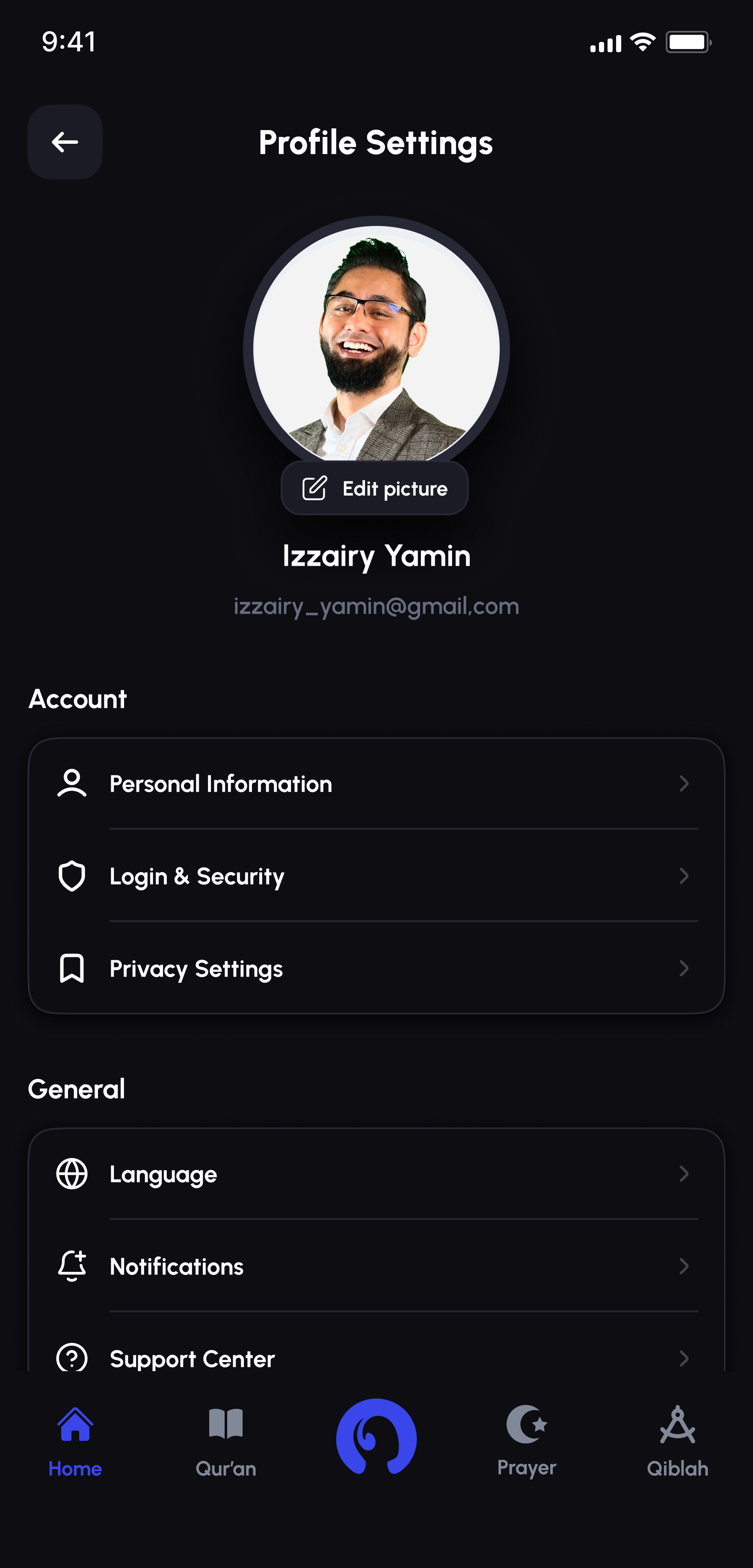
Sign in with Google, Apple, or email, or skip it entirely with "Sign in as Guest," since not every prayer companion needs a login wall on day one. Profile, login security, and privacy preferences live under one settings hub, with plain-language copy at every step: what's being shared, why, and how to delete it.


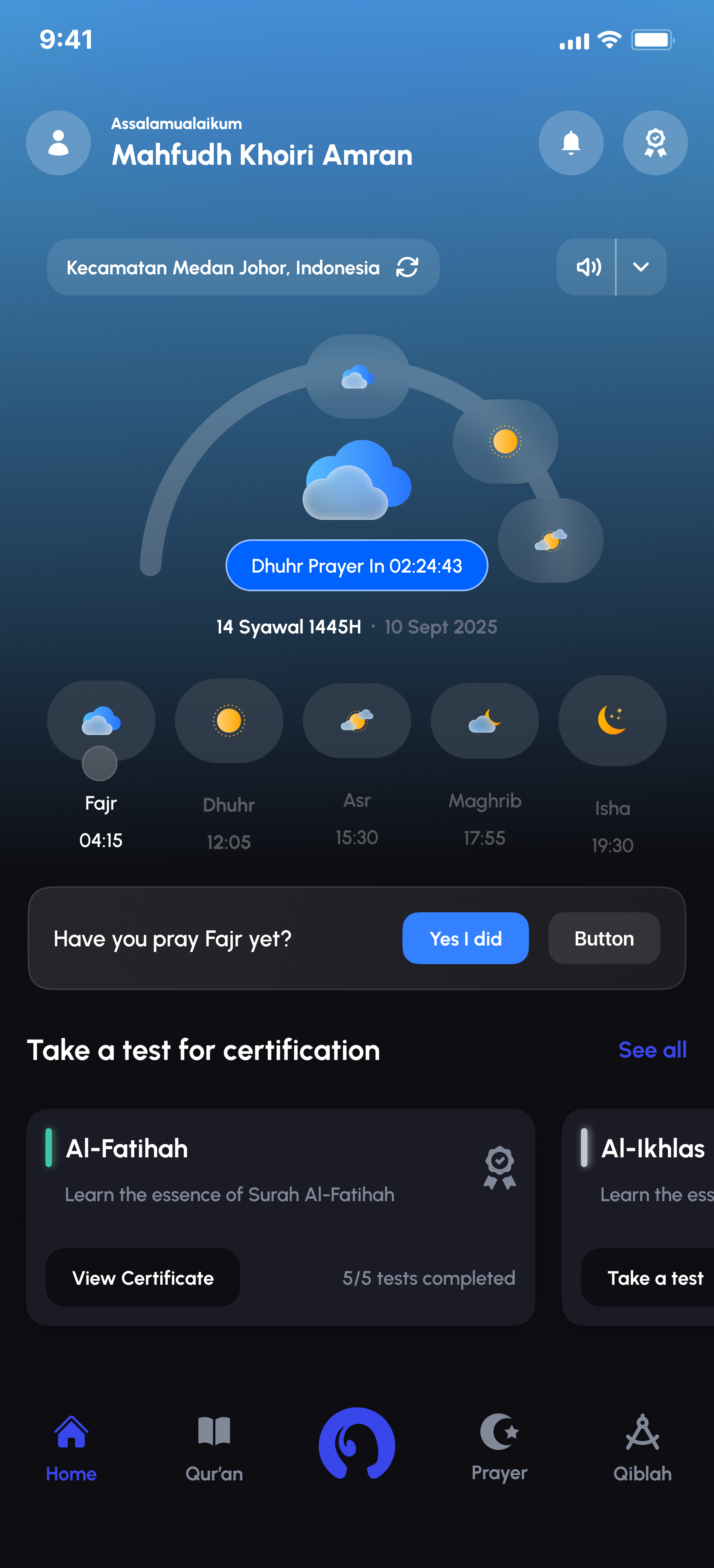
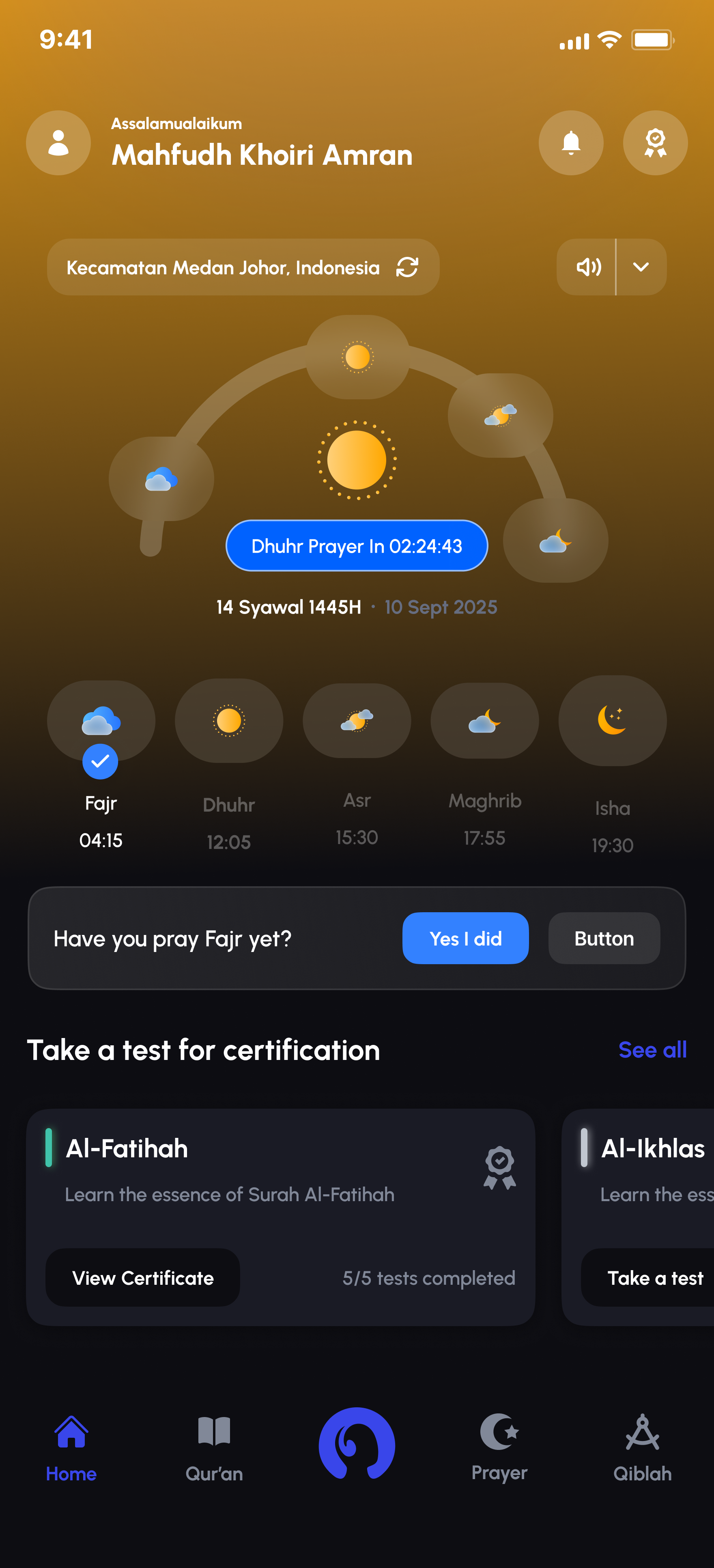
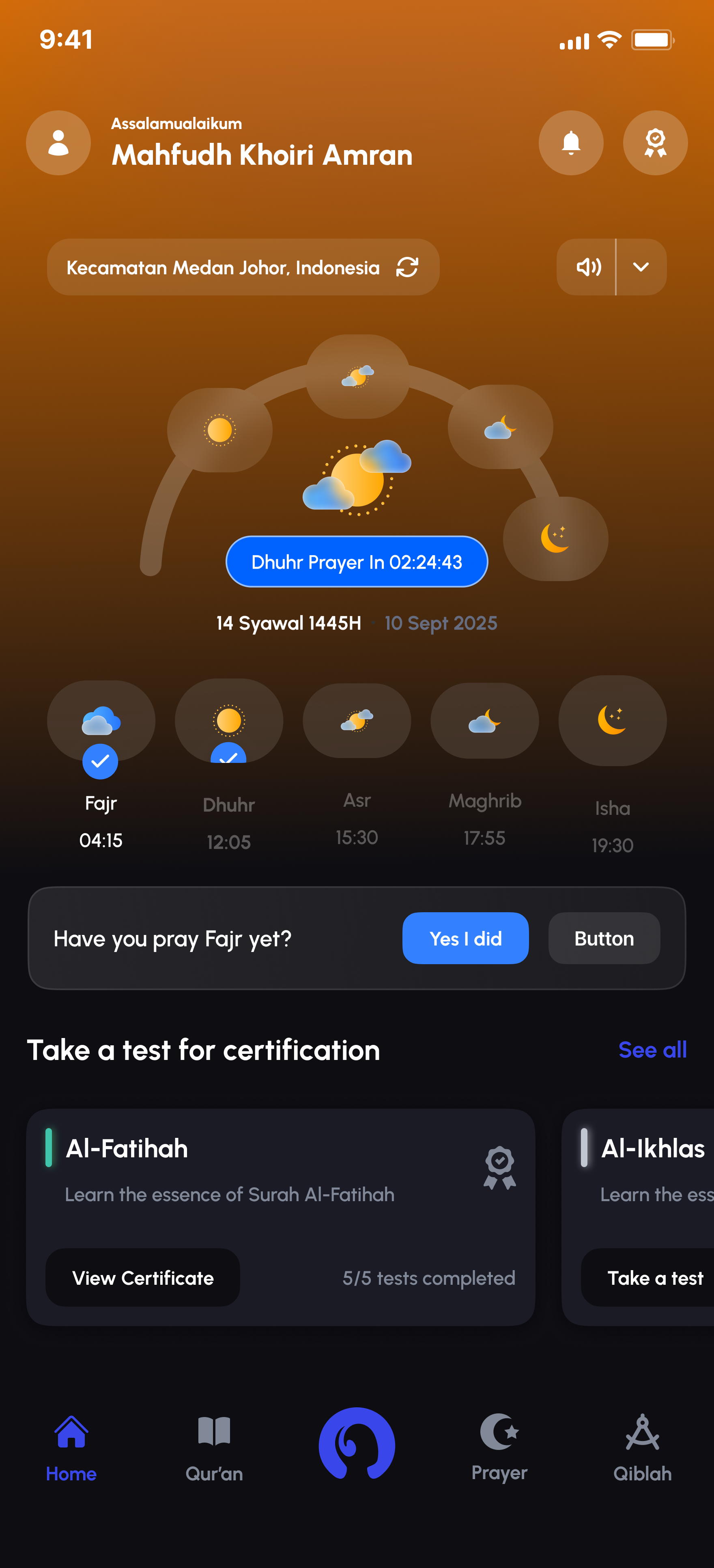
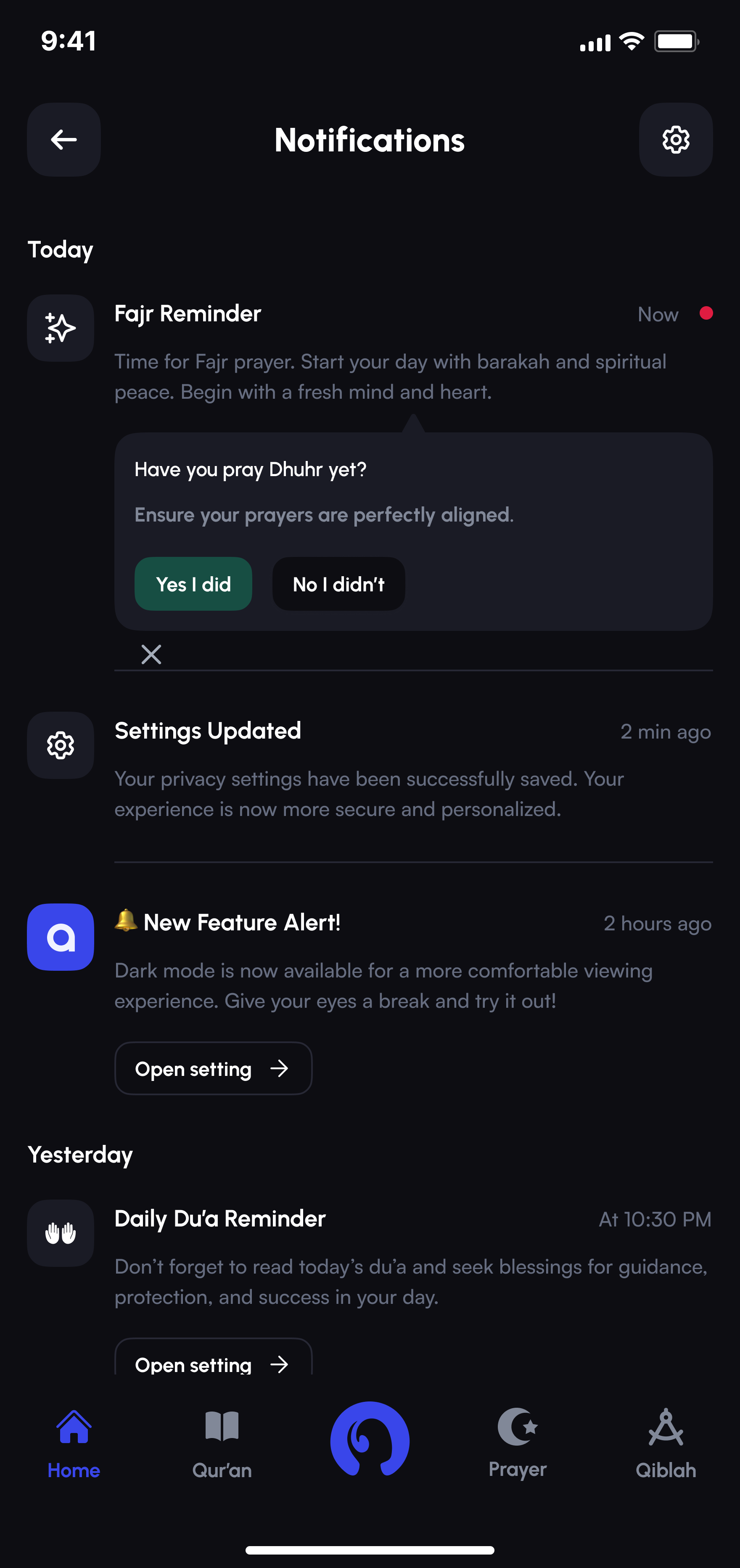
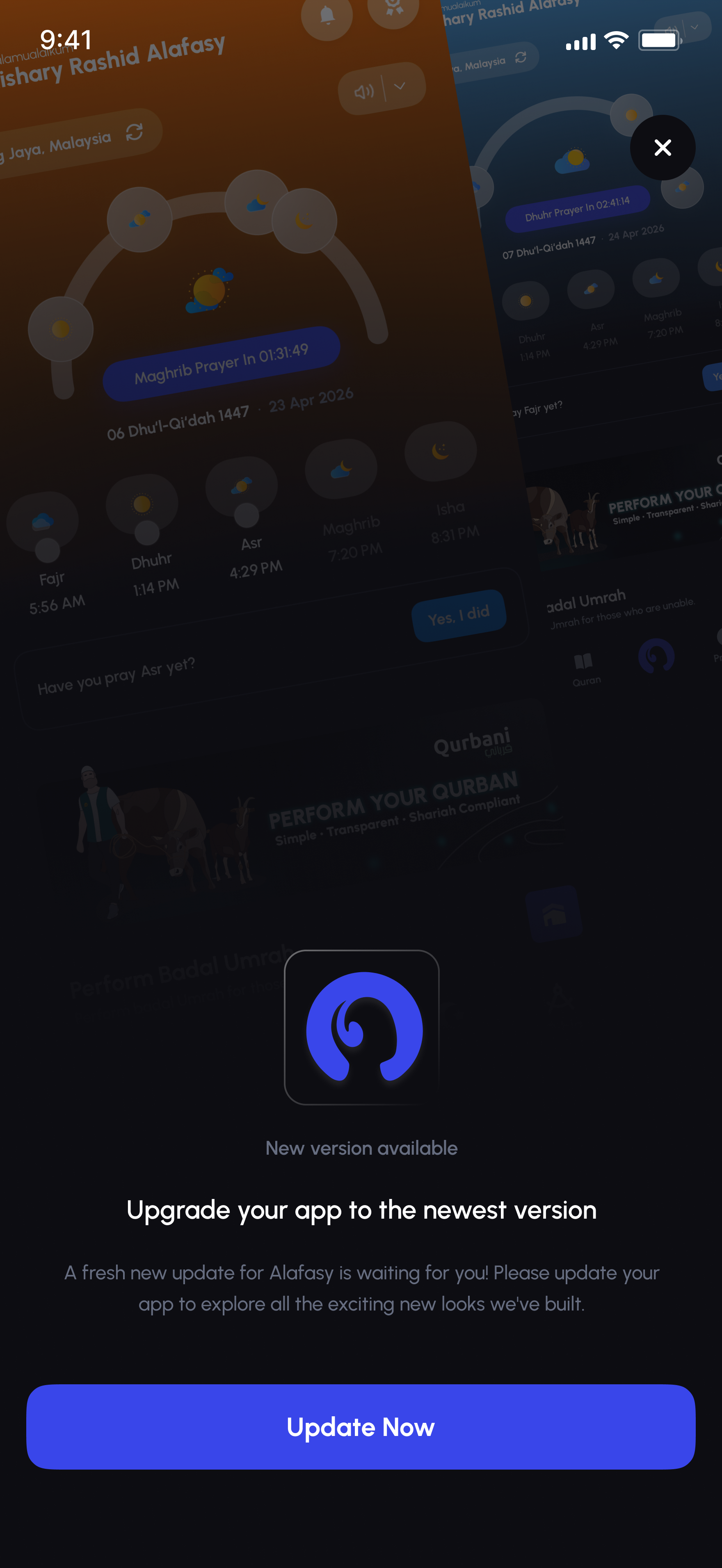
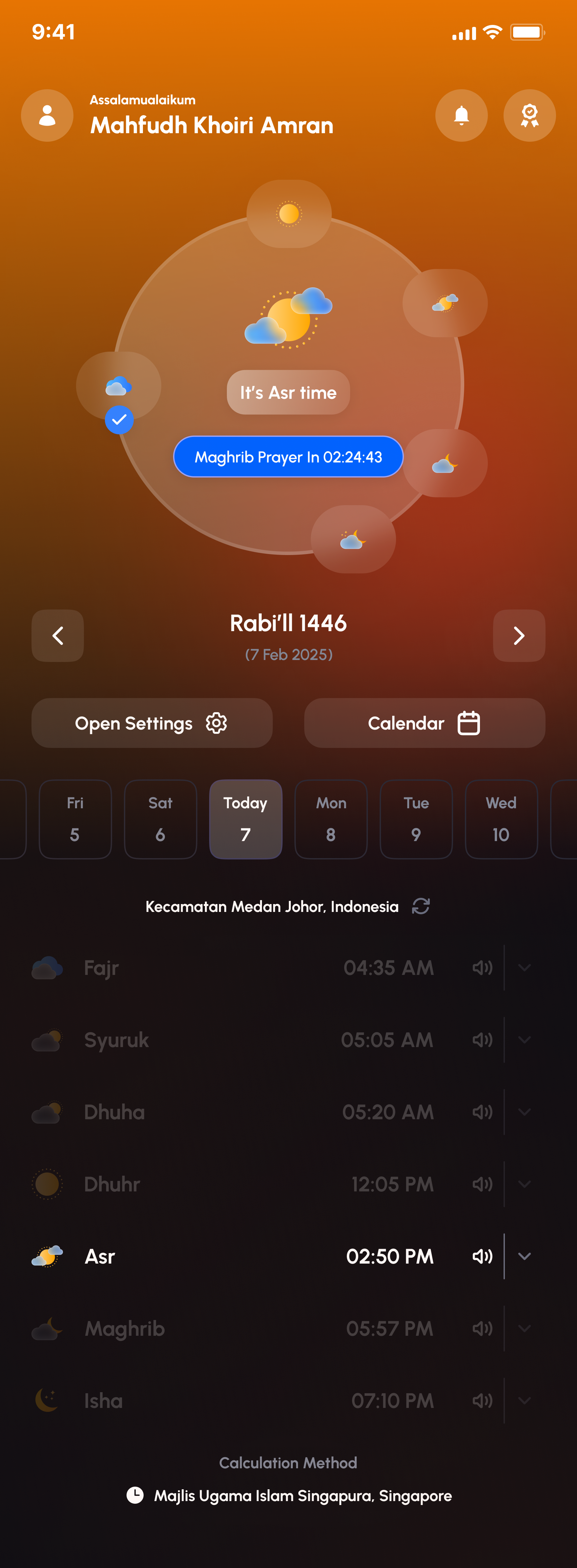
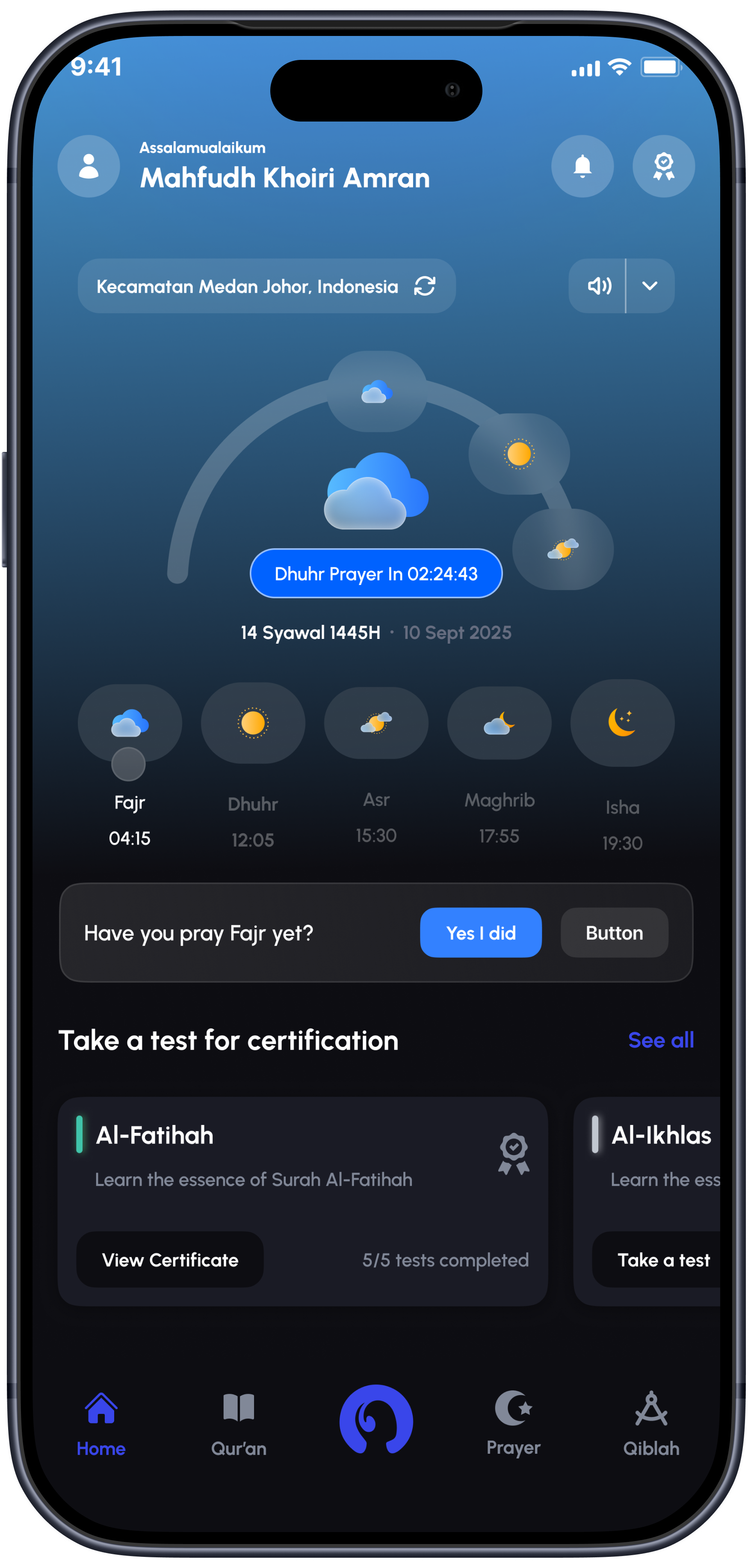
Sky-toned theming shifts the entire interface with actual prayer times, from pale morning blue through midday gold to deep dusk and night, rather than a simple light/dark switch. The dashboard underneath ties together a prayer-arc countdown, "have you prayed yet" nudges, certification progress, continue-reading cards, and a running feed of reminders, so the home screen earns a second look instead of just showing the time.


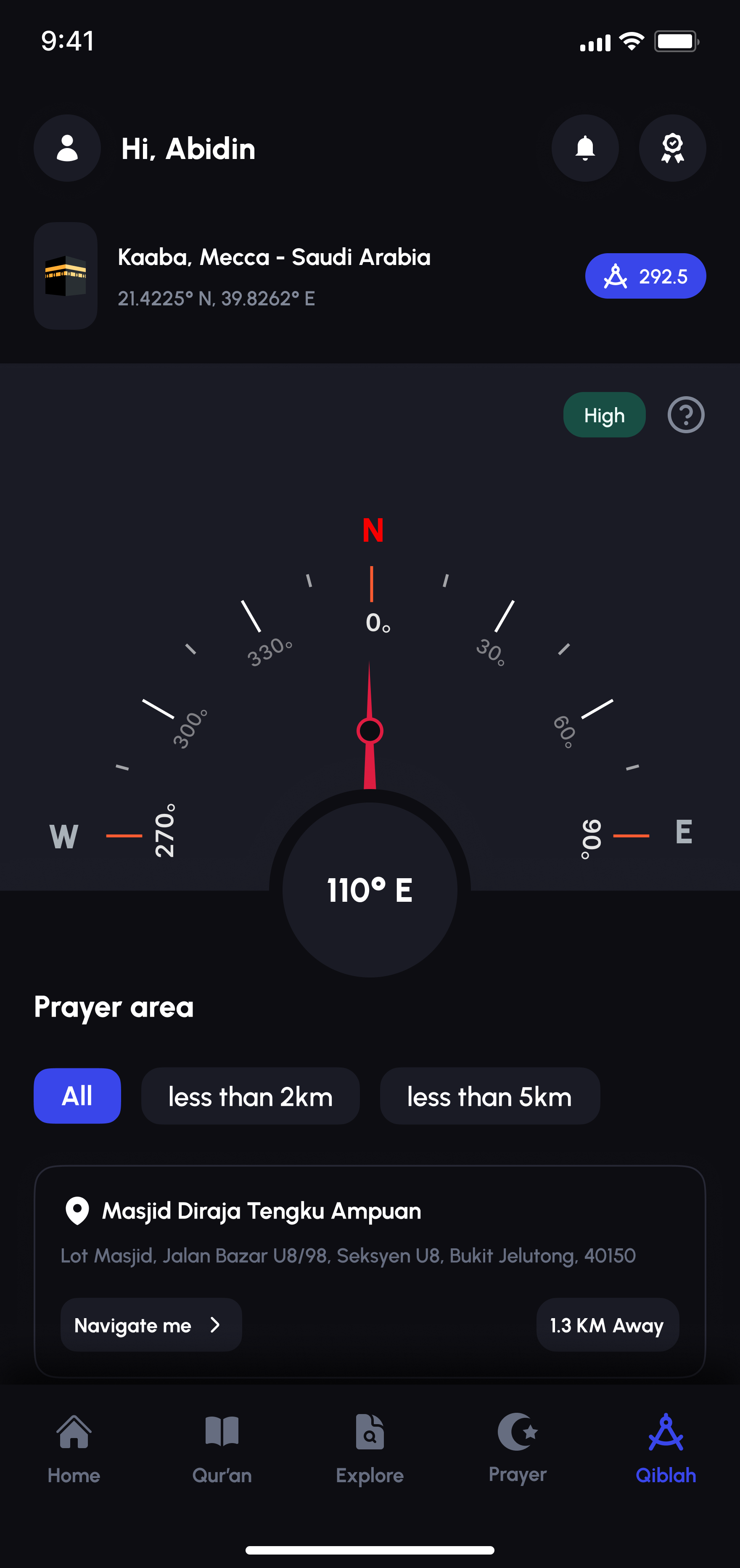
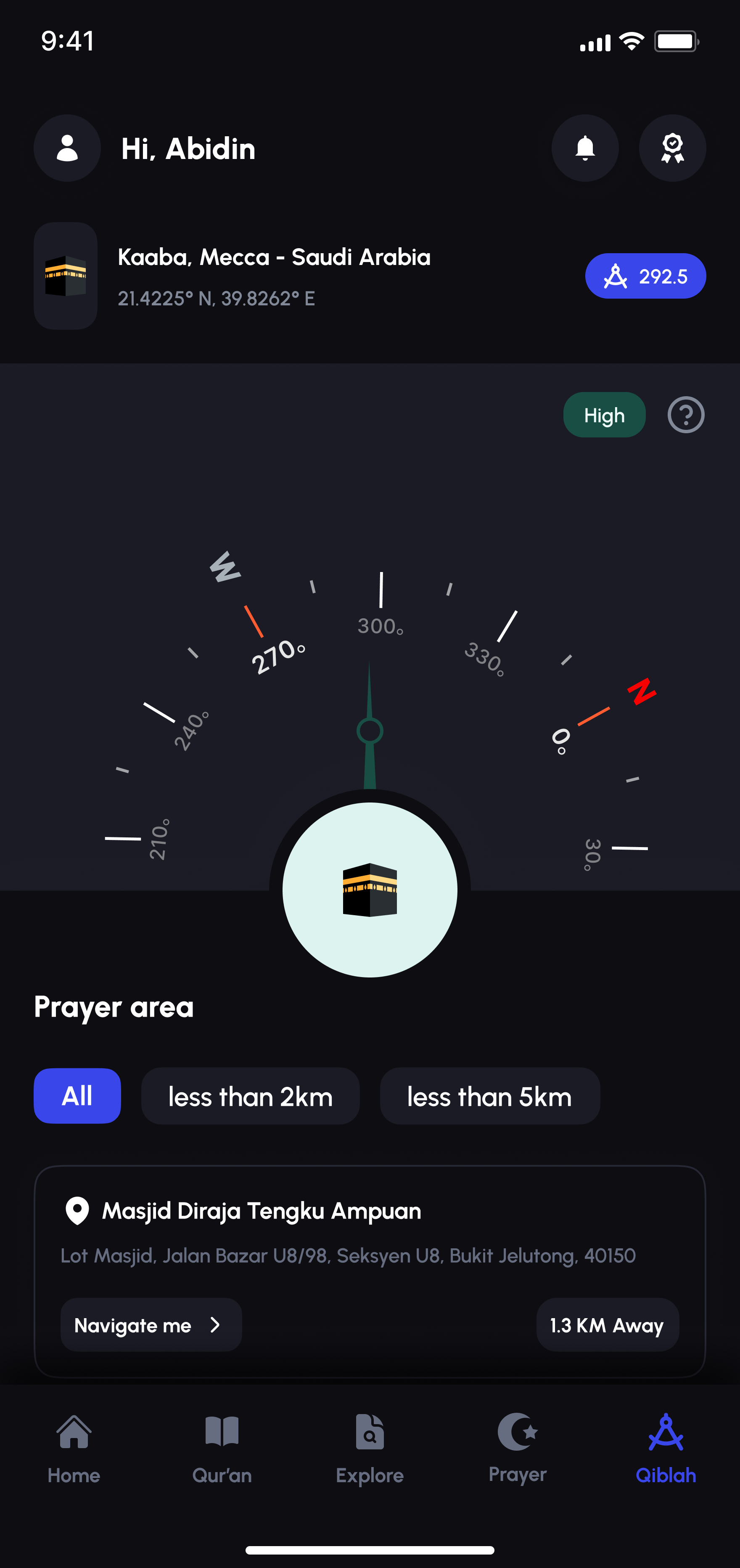
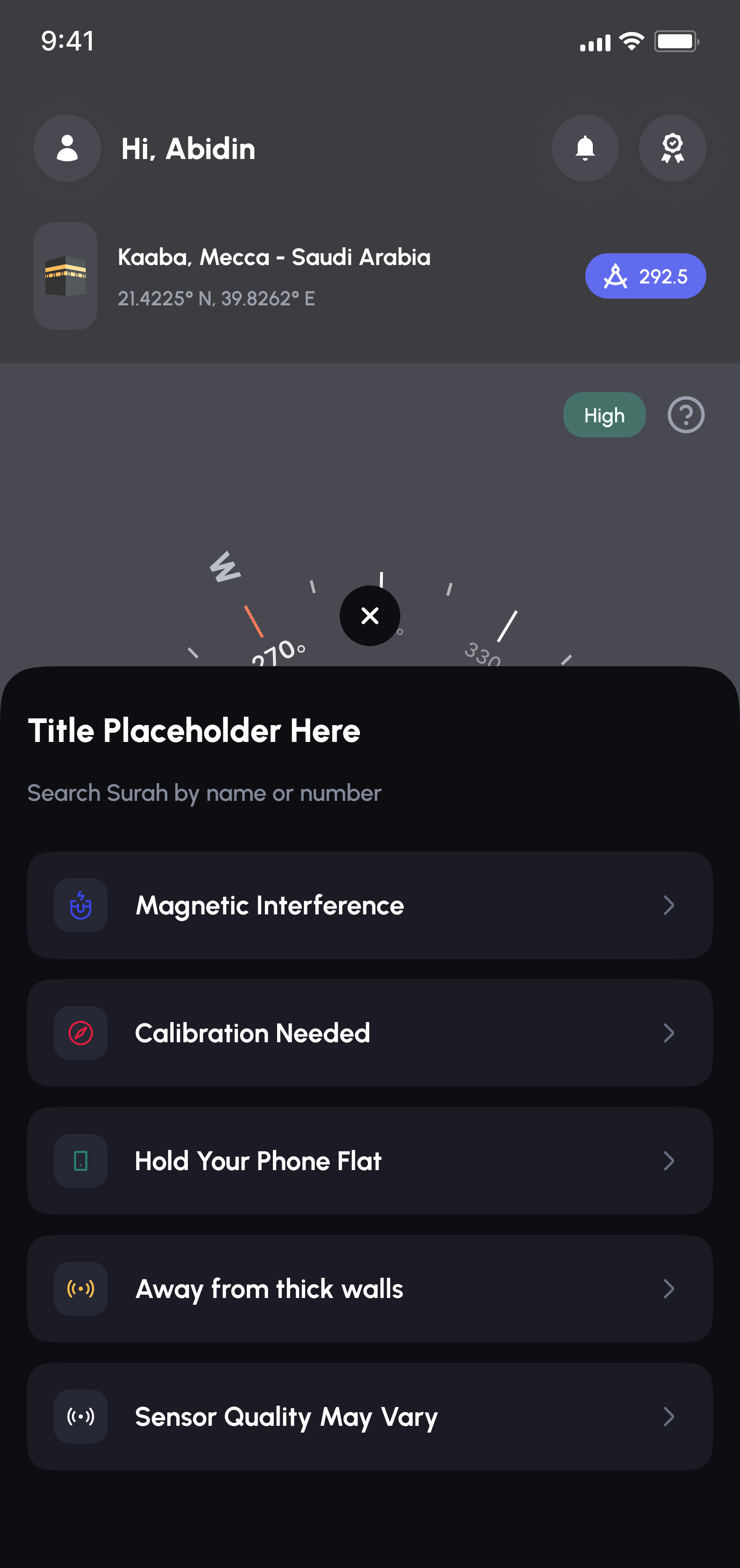
A compass is only useful if people believe the number it's showing. Alongside the live heading and a nearest-mosque finder, I designed a set of plain-language explainer screens for every way a phone's compass can go wrong, magnetic interference, an uncalibrated sensor, a tilted phone, thick walls, so the app can tell you why it's uncertain instead of just failing quietly.


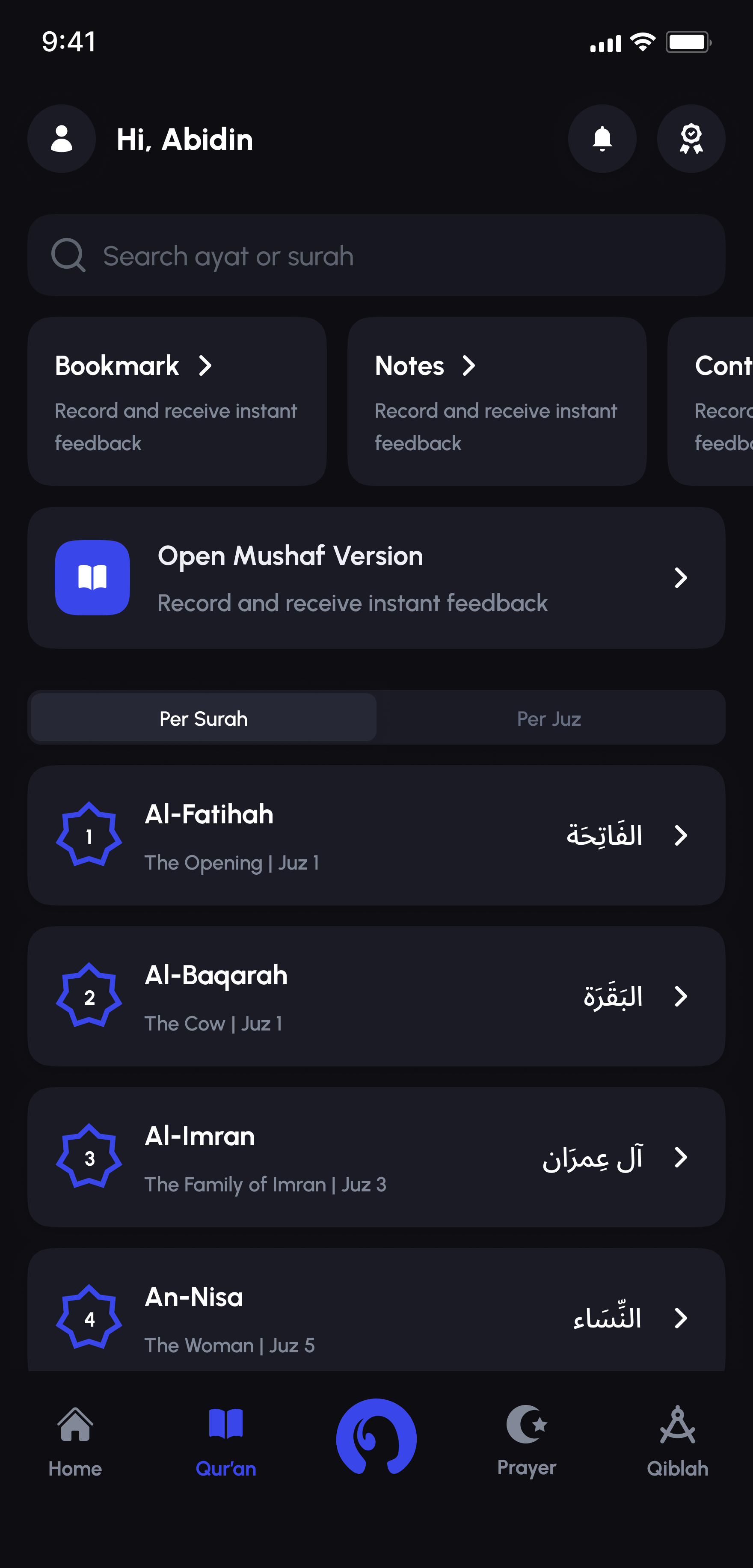
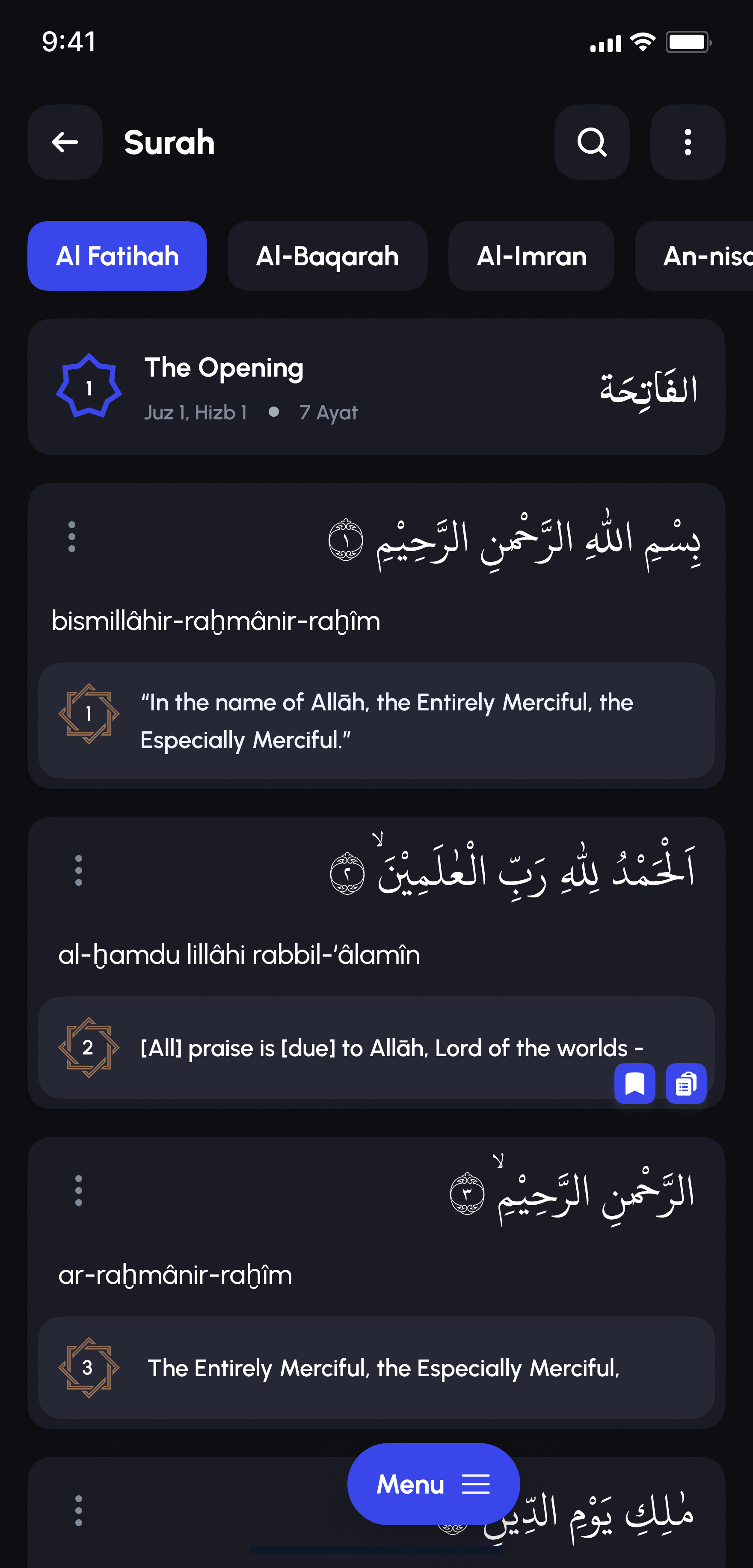
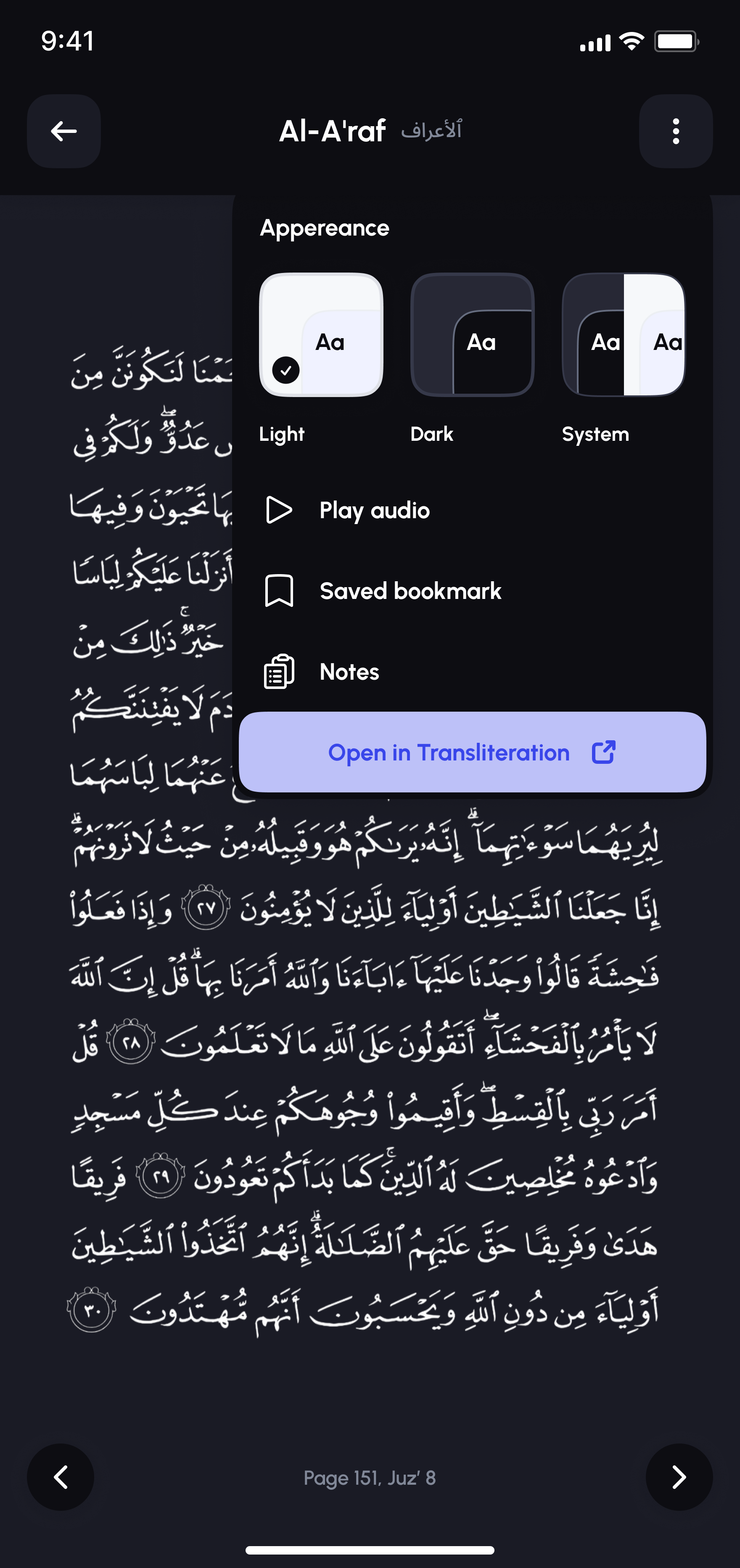
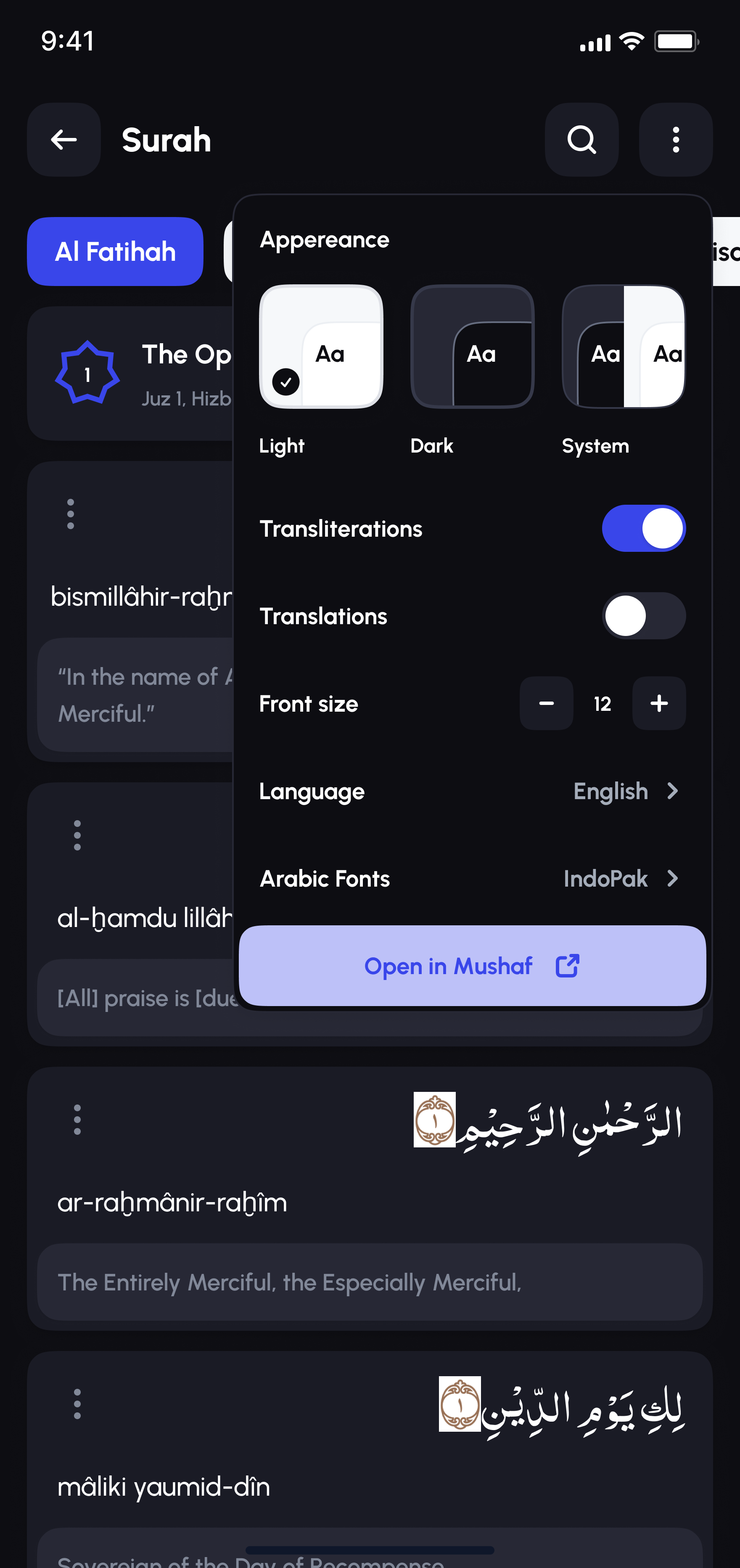
Bookmarks, notes, and continue-reading progress carry across sessions. Every ayah pairs Arabic script with transliteration and translation by default, verse-level audio and sharing are one tap away, and reading appearance, light, dark, or system, adjusts without ever leaving the page.


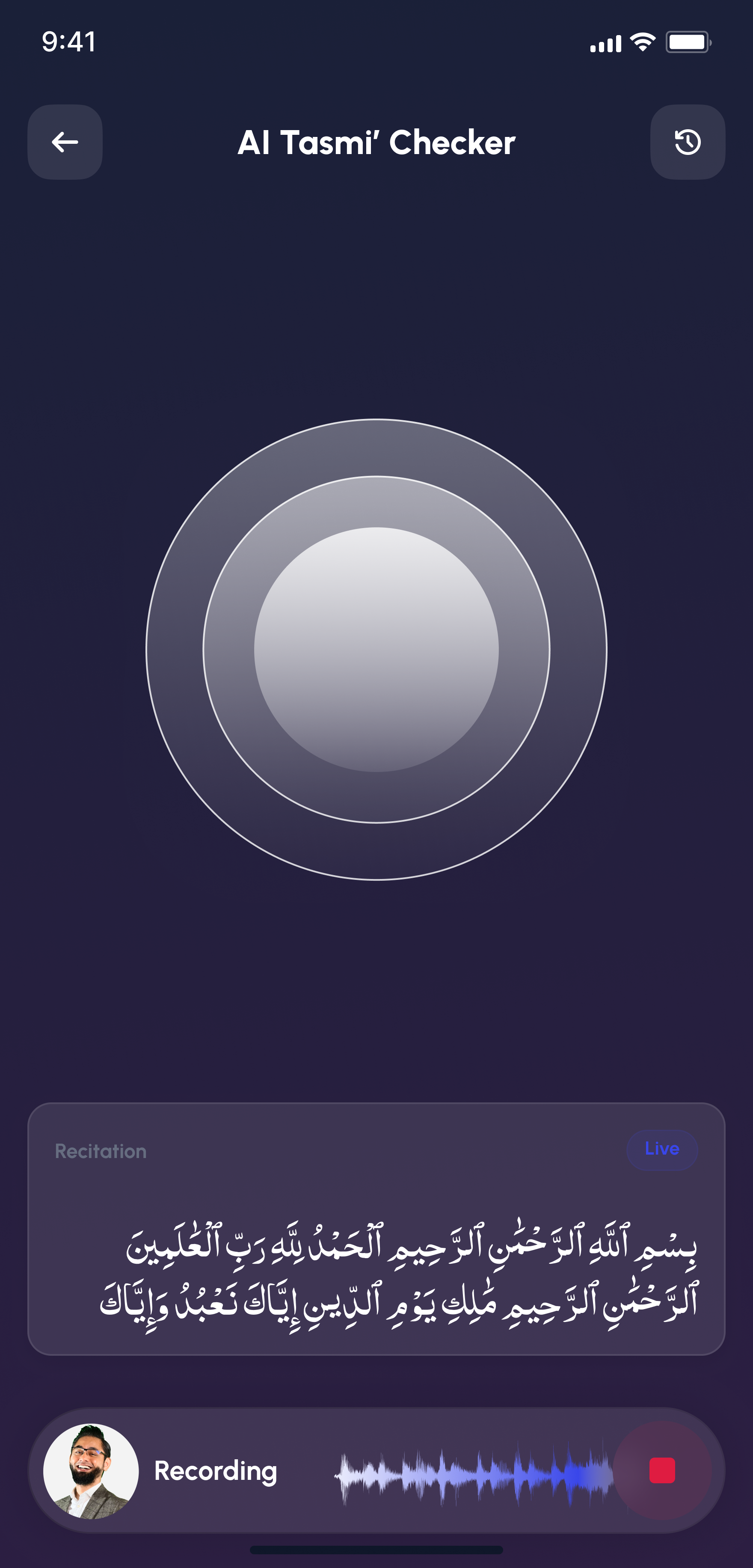
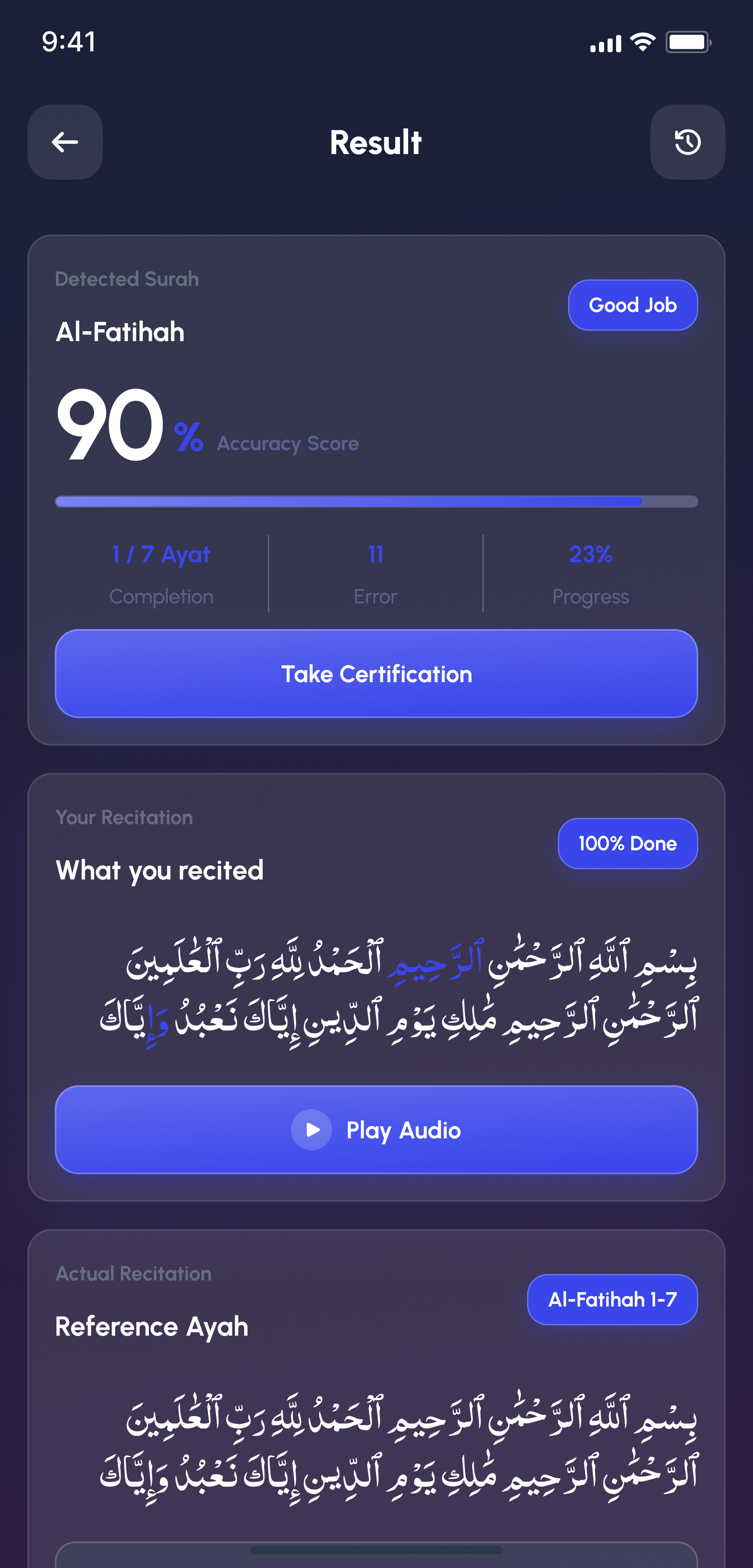
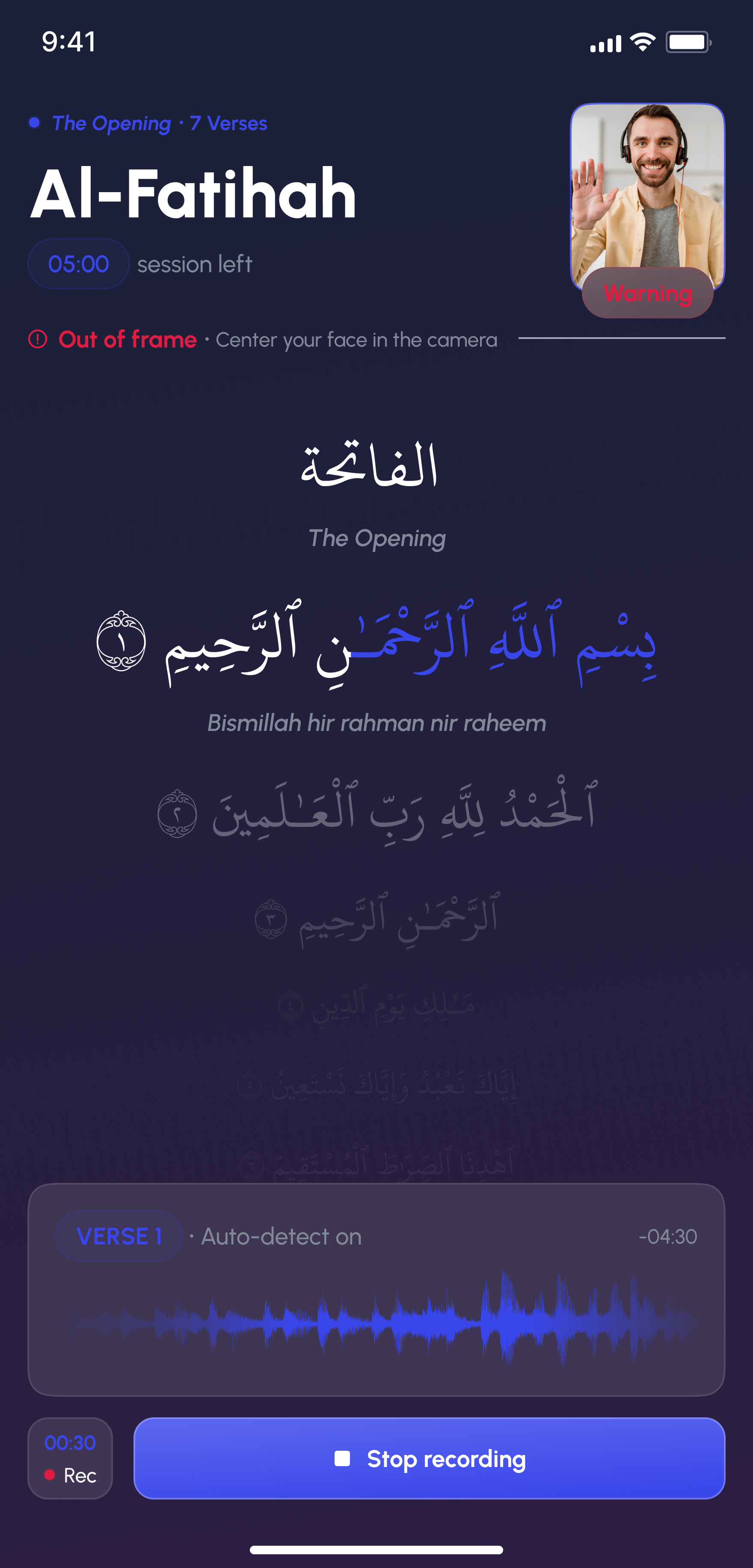
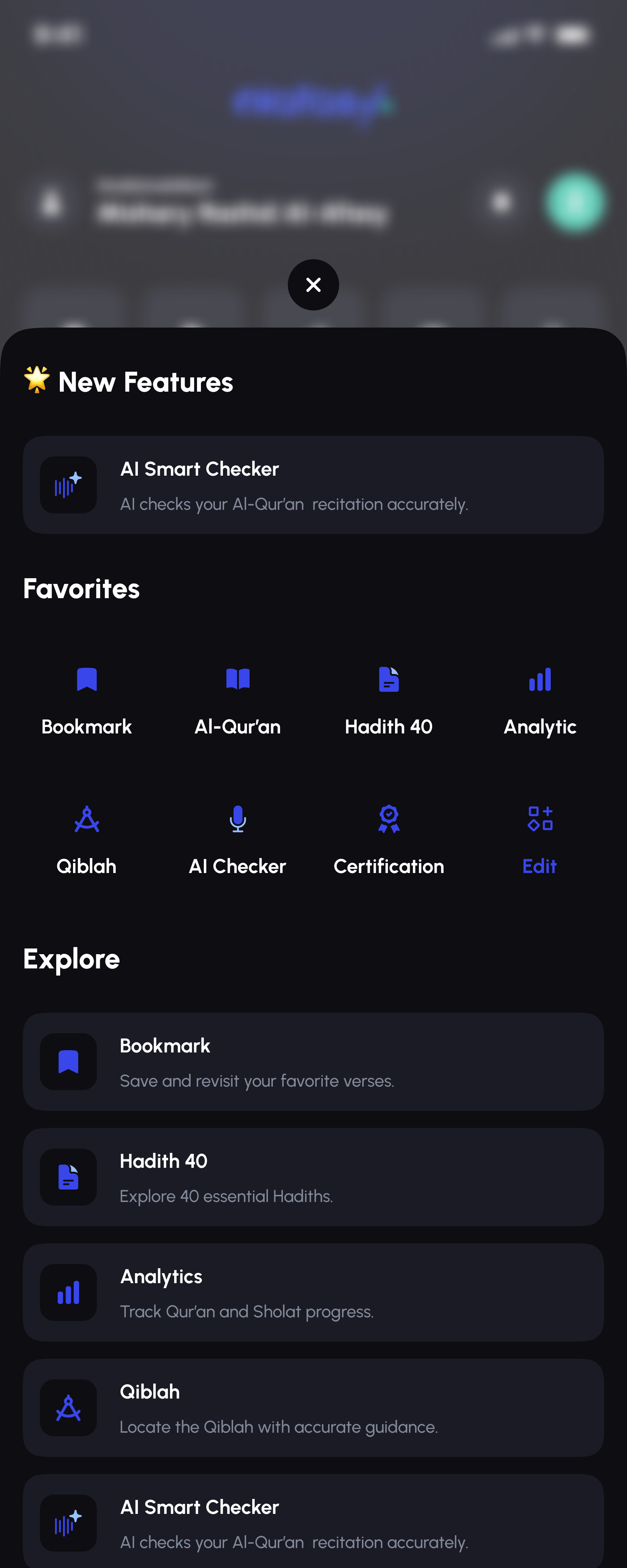
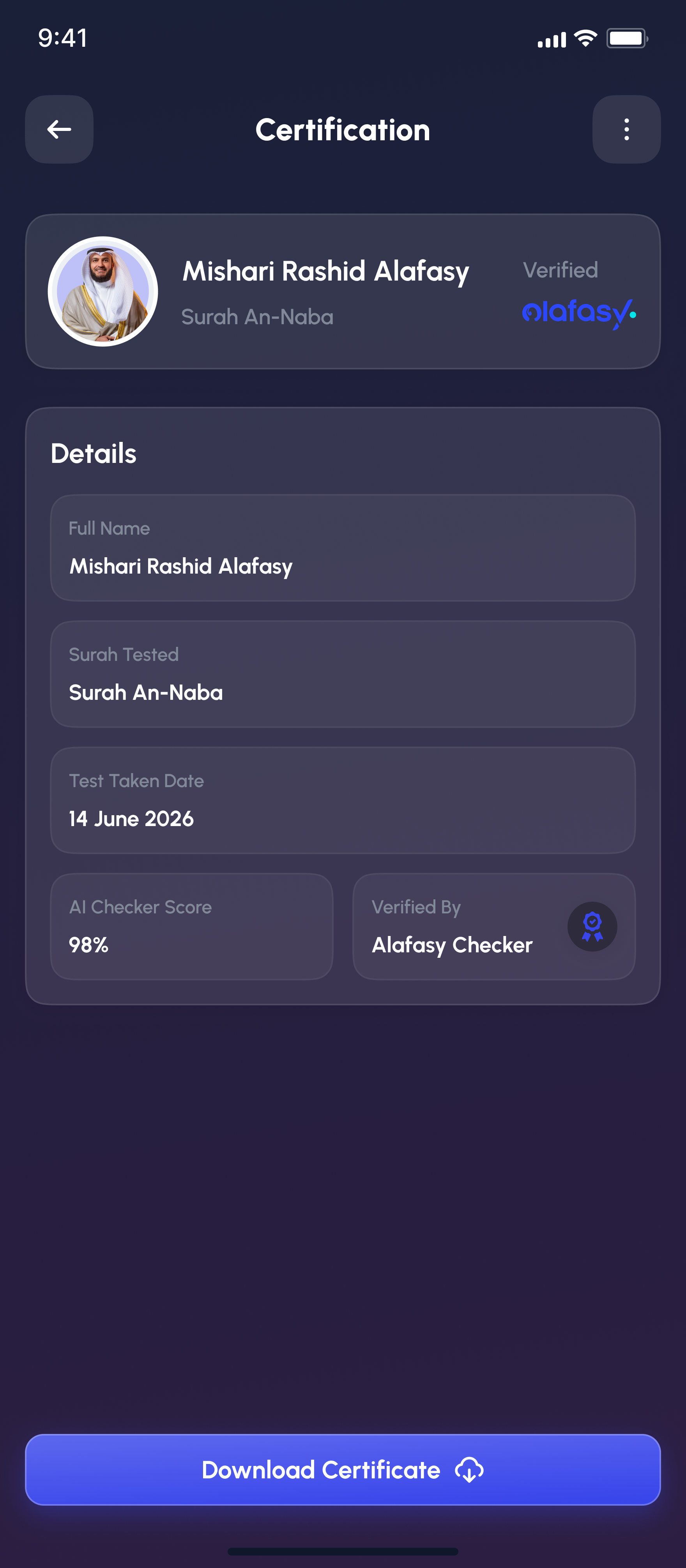
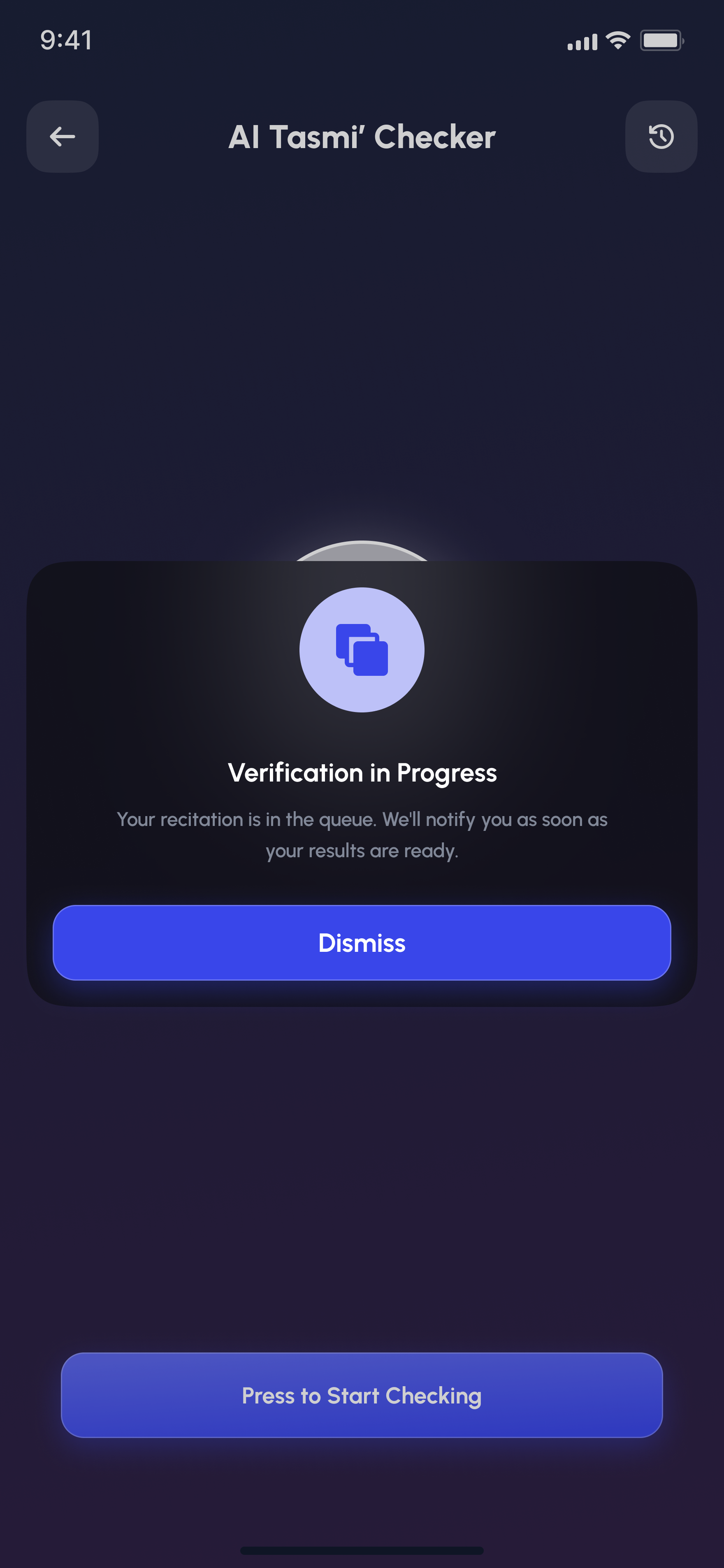
Beyond a simple completion badge, the AI Tasmi' Checker listens live to a recorded recitation, verifying the reciter stays in frame throughout, then compares what was said word for word against the reference ayah and returns an accuracy score with a categorized error breakdown, missed, extra, or incorrect, so where a recitation went wrong is visible, not just that it did.


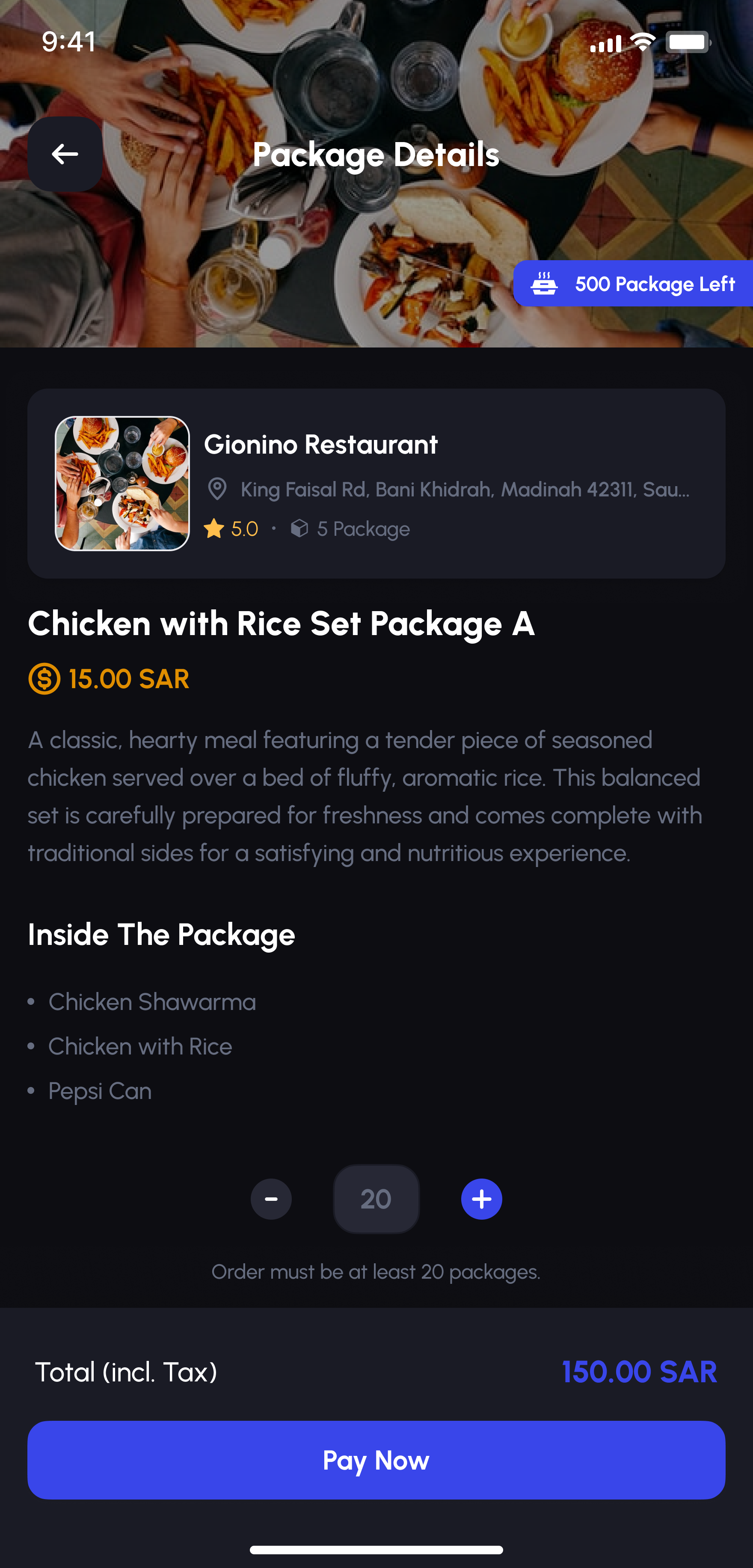
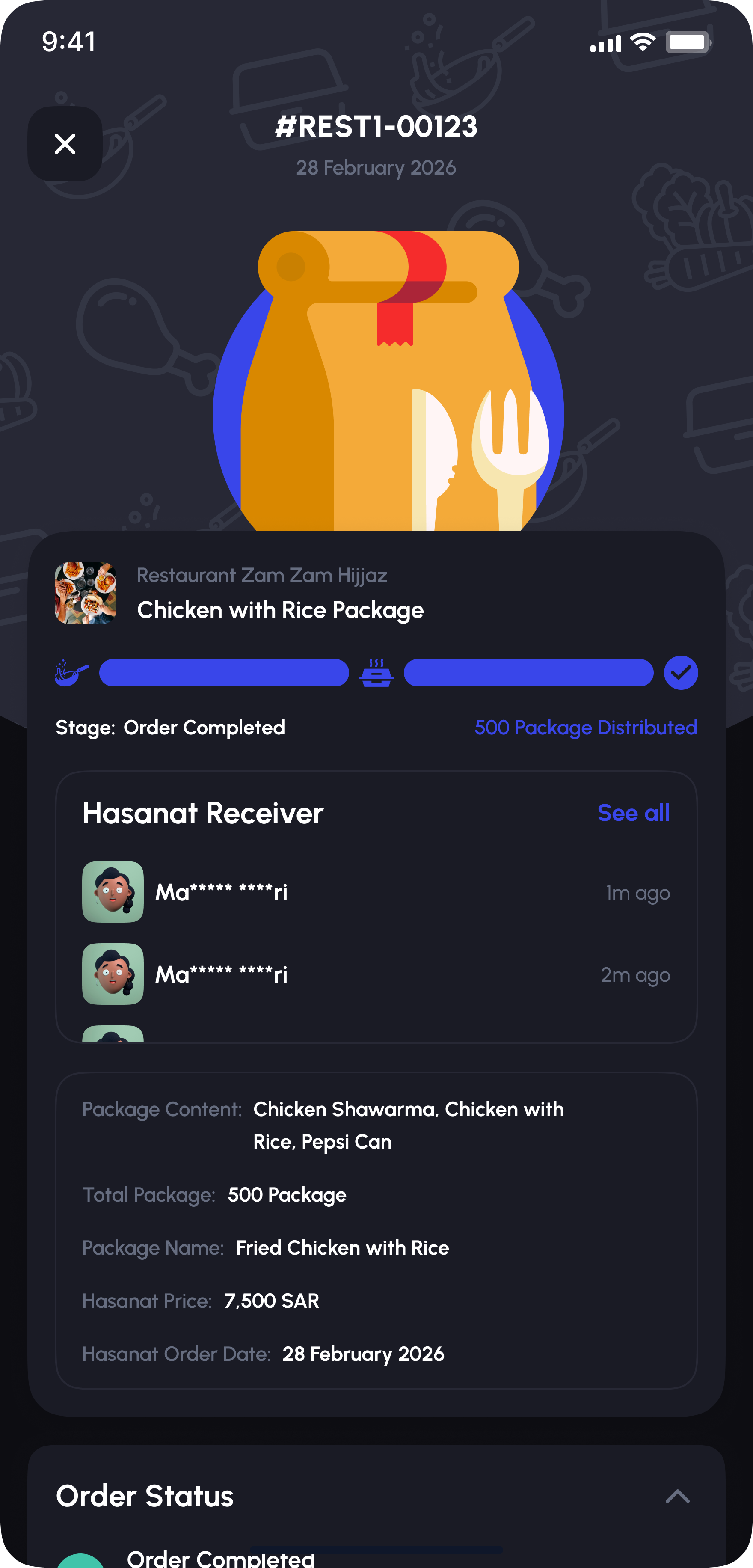
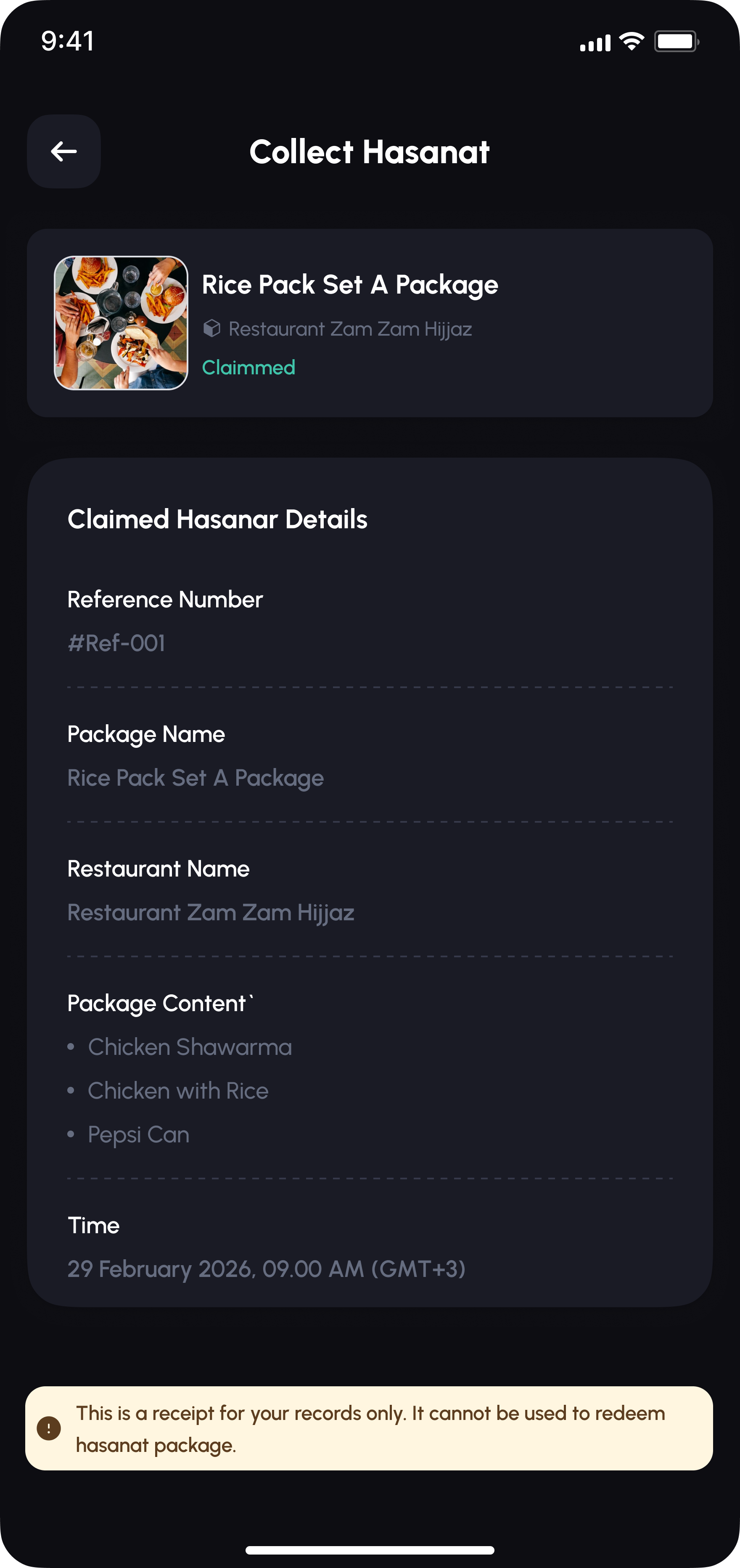
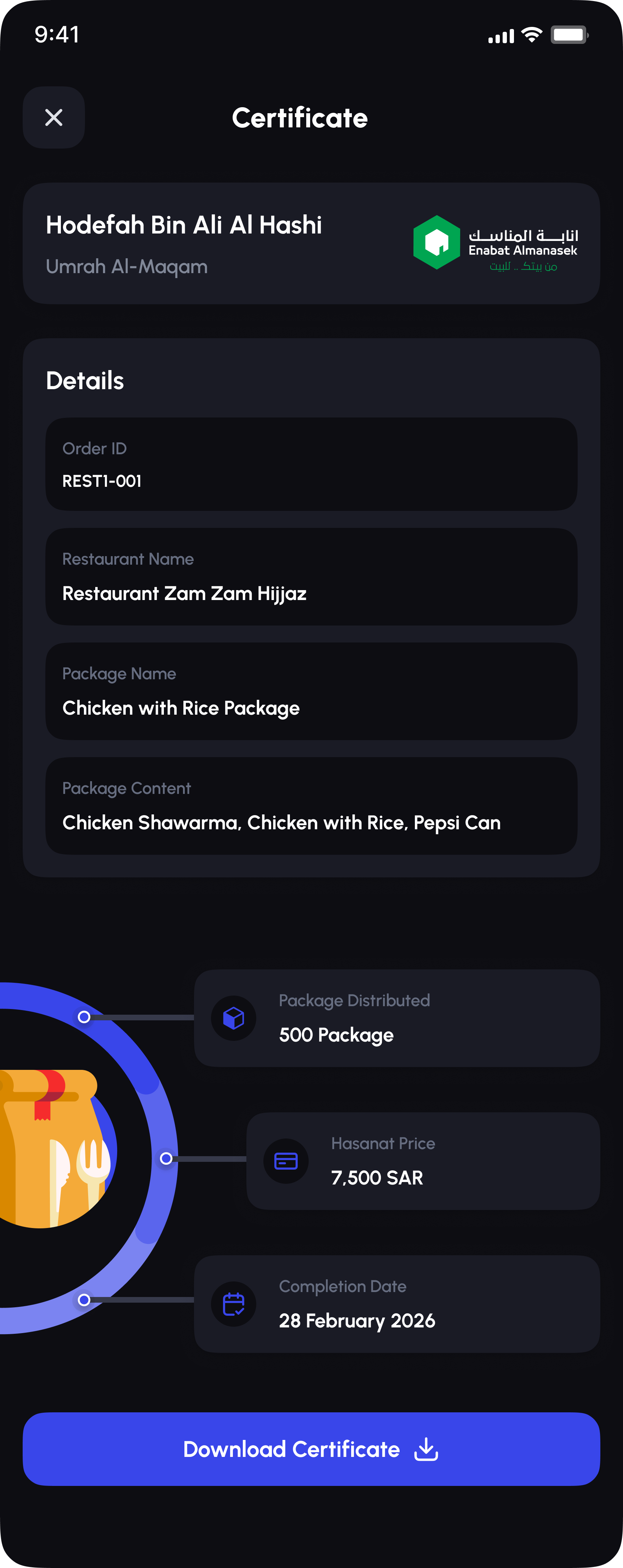
Hasanat lets a sponsor buy a meal package for someone in need at a partner restaurant, no cash changes hands, then track it through to distribution: how many packages went out, who claimed one (names masked for privacy), and a receipt on the receiving end. It's a small, complete marketplace tucked inside a prayer app, built around the idea that giving should be as easy to follow as it is to give.


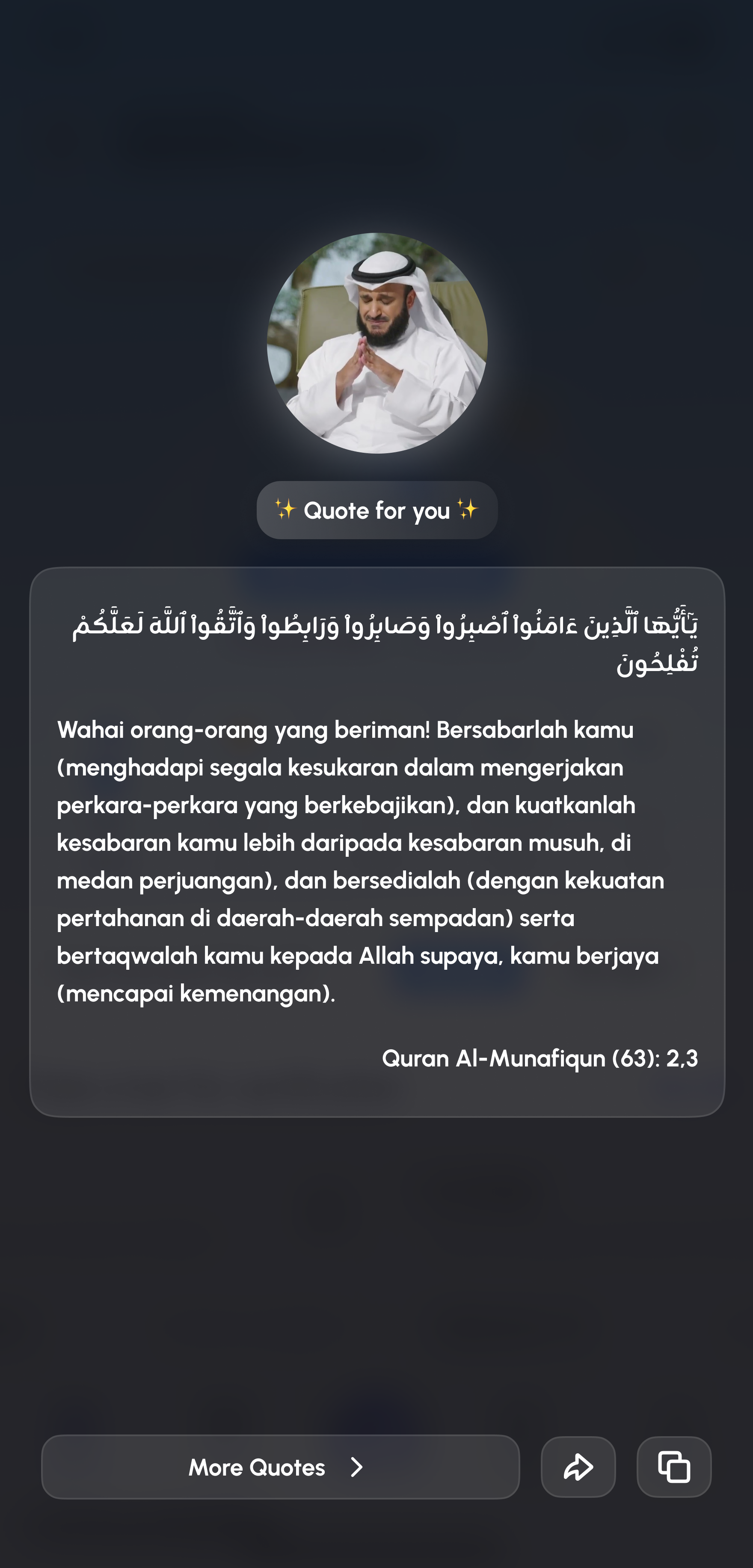
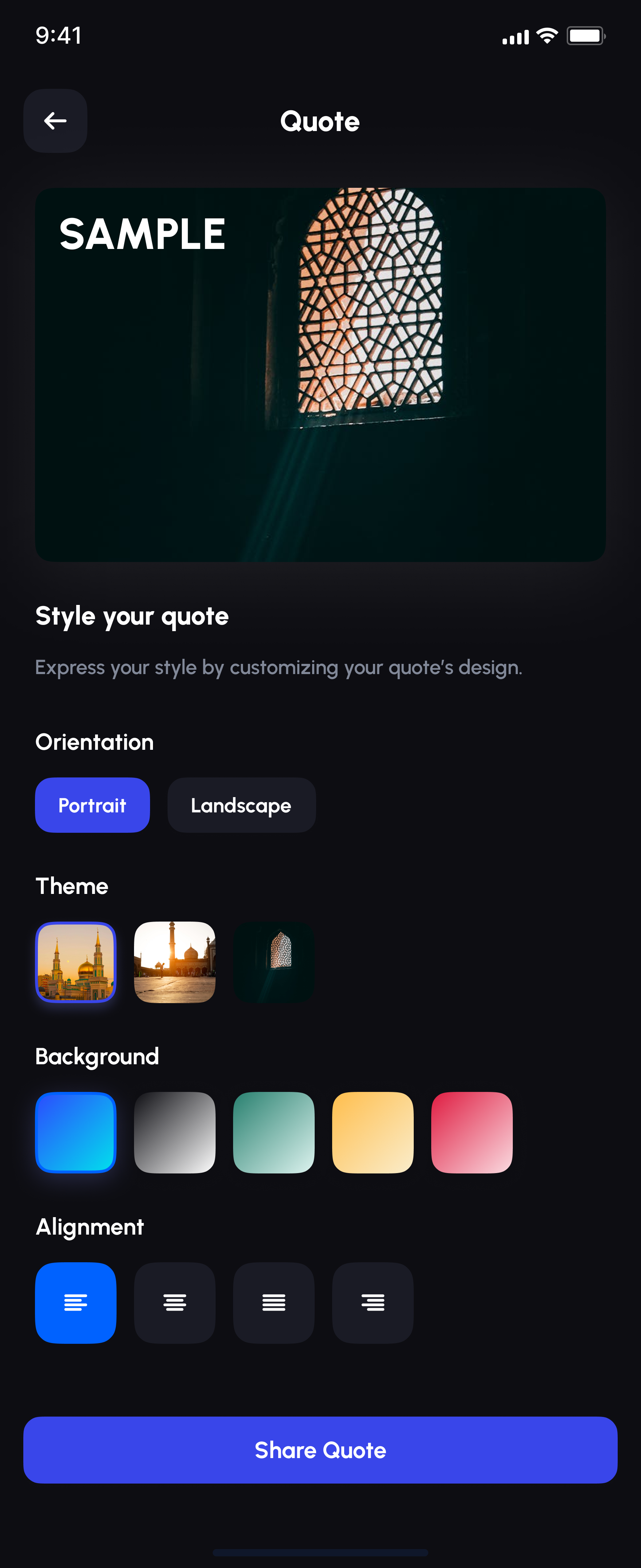
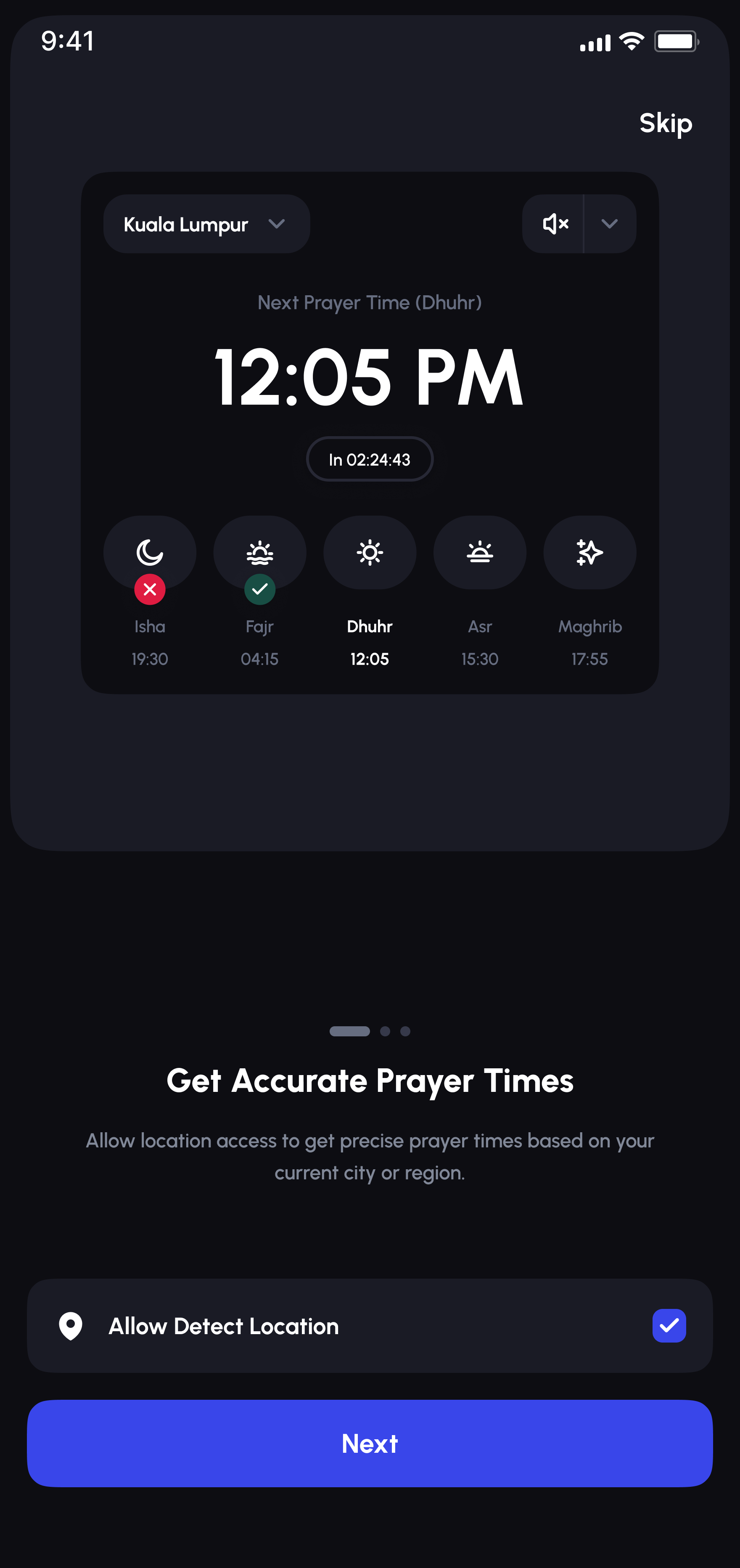
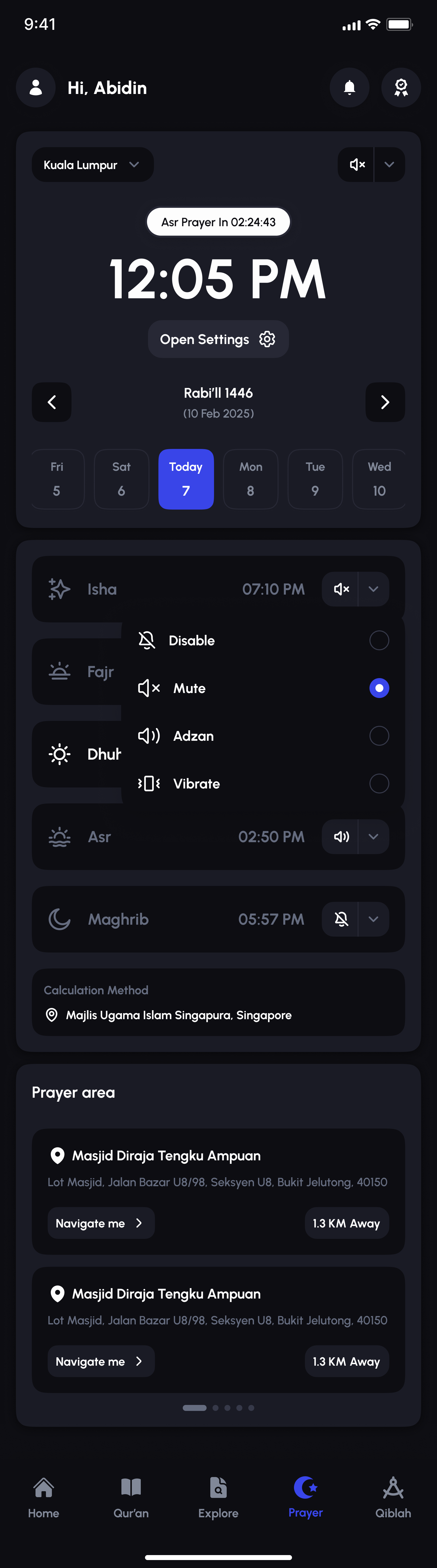
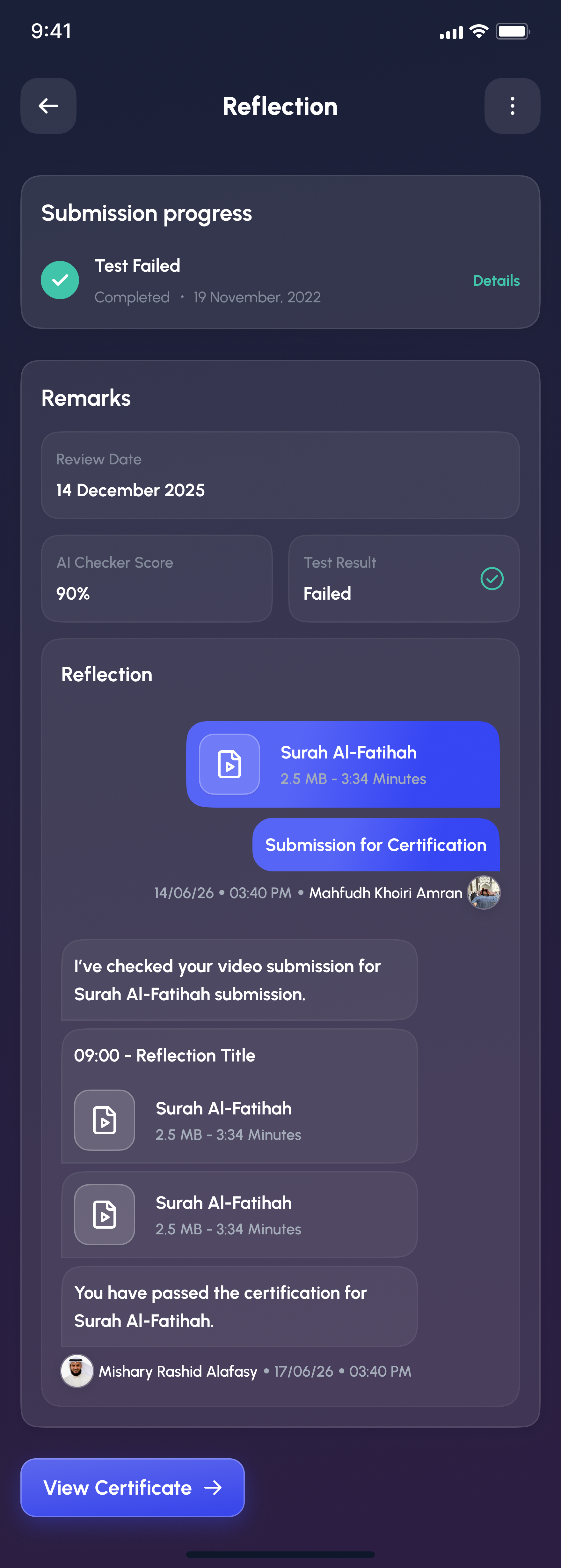
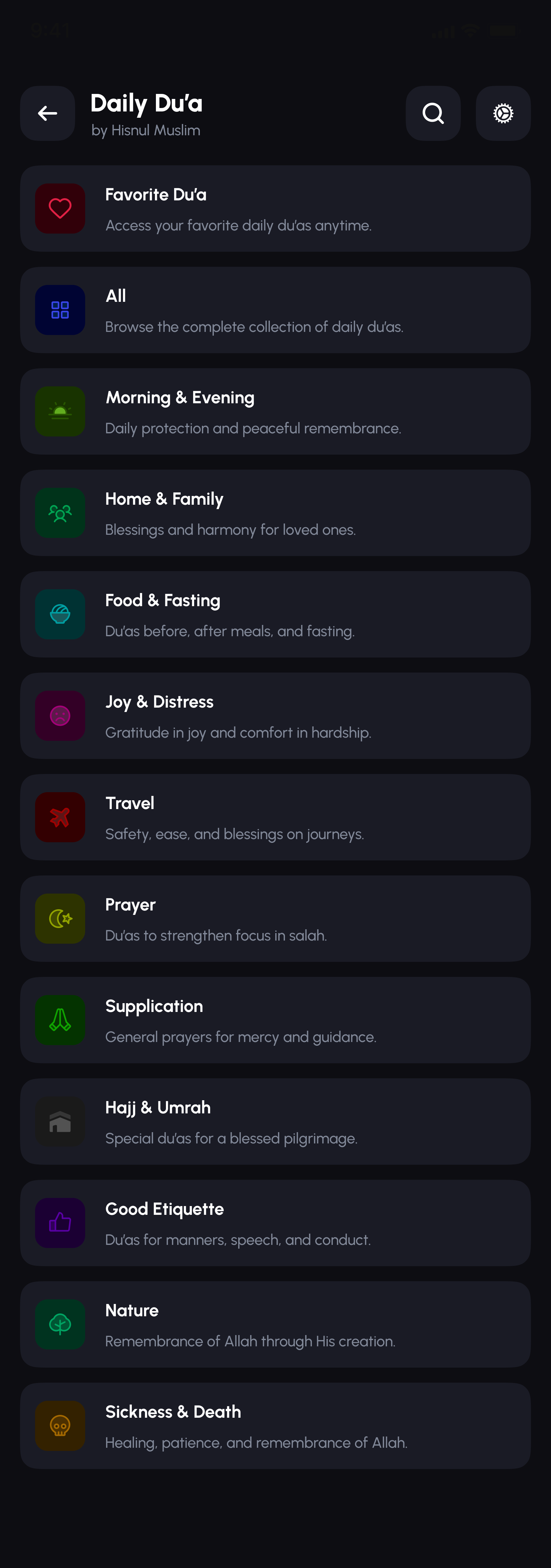
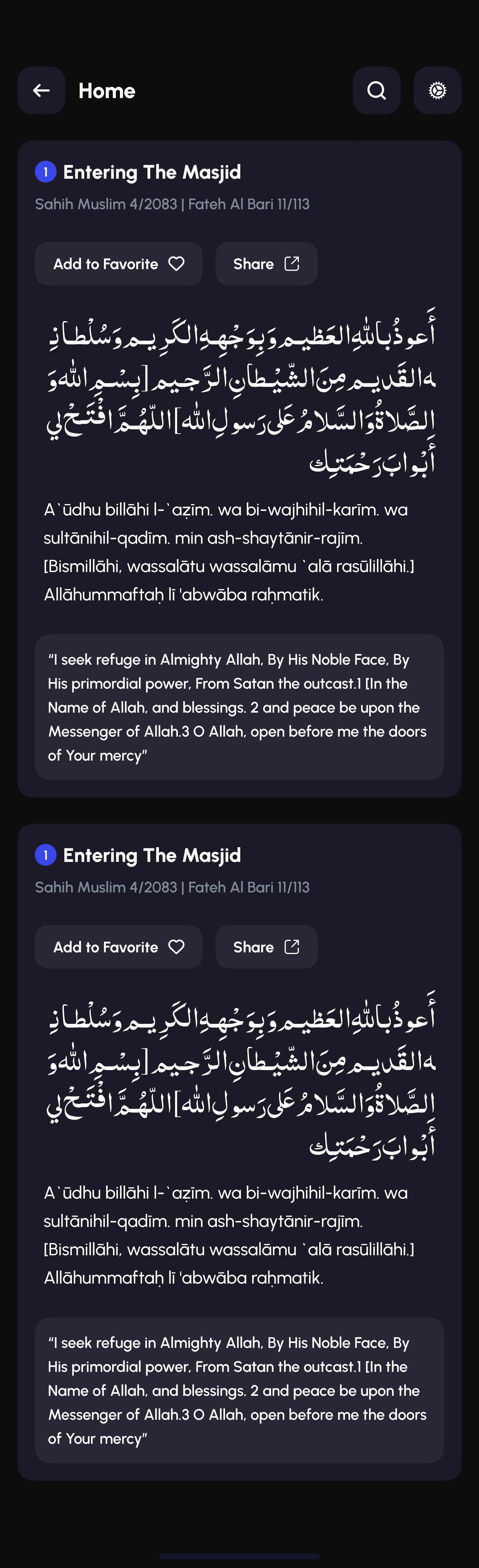
This covers six areas out of a much larger product, onboarding, a home-screen widget, a full daily-du'a library, account settings, and more all shipped alongside what's shown above. A few more screens, below, give a wider sense of the range.
Alafasy is one of nine products designed under RiverLens, and the one I'm most often asked to show in person, since anyone can pull it up on their own phone. The time-of-day theming turned out to be the detail people remember most: the app looks different depending on when you open it, which is exactly the point.